
Most lures are equipped with split rings in two places: at the eyelet and wherever hooks are attached to the body of the lure.
The split ring at the eyelet allows the lure or jig a greater freedom of movement and those that serve as an attachment point for the hooks enable them to be easily replaced.
This short post will give you some insight into what to look for when you need to replace them as well as how to do it.
When to Replace the Split Rings
The split rings on your lures should be replaced whenever a battle with a big fish has damaged them. They can also get stretched and deformed under stress, which can predispose them to failure. That is not something you want to experience in the midst of an epic battle with a fish.
You may also want to replace the hooks on your lures (which may necessitate a change of the split rings as well) under certain circumstances.
Hooks can be resharpened, but stresses can weaken the hook shank or bend. Anglers commonly re-bend bent hooks back into shape because it is faster and easier than replacing the hook but this is not always a good practice because once a hook has bent it has experienced fatigue and is likely to bend again at the same point, straighten out completely, or worse, snap. This is understandably something you also don’t want to experience during a fight.
How to Replace the Split Rings
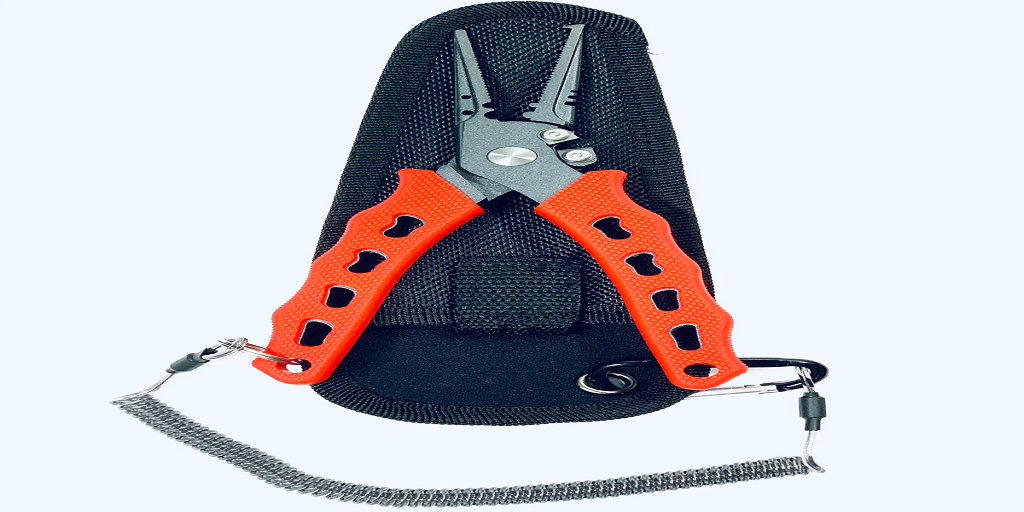
To open split rings and replace them (or the hooks attached to them) you should get a tool called “split ring pliers.”
Split ring pliers have special jaws with a tip that hooks inward. This inward hook serves as a wedge to force the split ring slightly open so that it can be removed. The tool is also designed to control the rings while you’re working with them, as they can be quite finicky and have a habit of shooting off into the wild blue yonder when you’re trying to work with them. These special pliers will help prevent that.
To work with the split rings, place the base of the ring against the pliers’ lower jaw, and position the upper jaw such that the hook is pointed inward and contacts the split ring where it separates. Apply slight pressure to the pliers to force the ring apart, then slide the ring so that the end of the ring can be slipped through the eyelet that retains it.
Take off the old split ring (or ring and hook) and repeat the process with your new ring. If replacing hooks too, you can save time by opening the ring, wedging in the hook’s eye to keep the ring open, and then feeding the ring back onto the eyelet on the lure. This will enable you to knock out two steps in one.
For Split Rings, Pliers, Jigs and More
This basic primer should prepare you for removing old split rings and replacing hooks. If you’re here for new split rings, pliers, or other tackle, visit Johnny Jigs or check out their official YouTube channel where you will find additional helpful information.
