
Restaurants get targeted for ADA violations more than most business owners realize. Some of it comes from genuine advocacy for accessibility, which is legitimate. A lot comes from attorneys who send scouts into commercial spaces looking for compliance failures, and Braille signs are exactly the kind of thing those scouts document: easy to photograph, easy to measure, and easy to cite. The demand letter that follows isn’t just about money. A filed complaint is public record, and some plaintiffs are more interested in a restaurant’s reputation than a settlement.
The business doesn’t need to look neglected. A beautiful dining room with updated fixtures and fresh paint is just as inaccessible if no one has addressed accessible signage. A violation doesn’t care about the aesthetic. Here’s some information on why custom Braille signs are a must for restaurants that want to stay compliant.
Where Do Restaurant Braille Signs Actually Get Scrutinized?
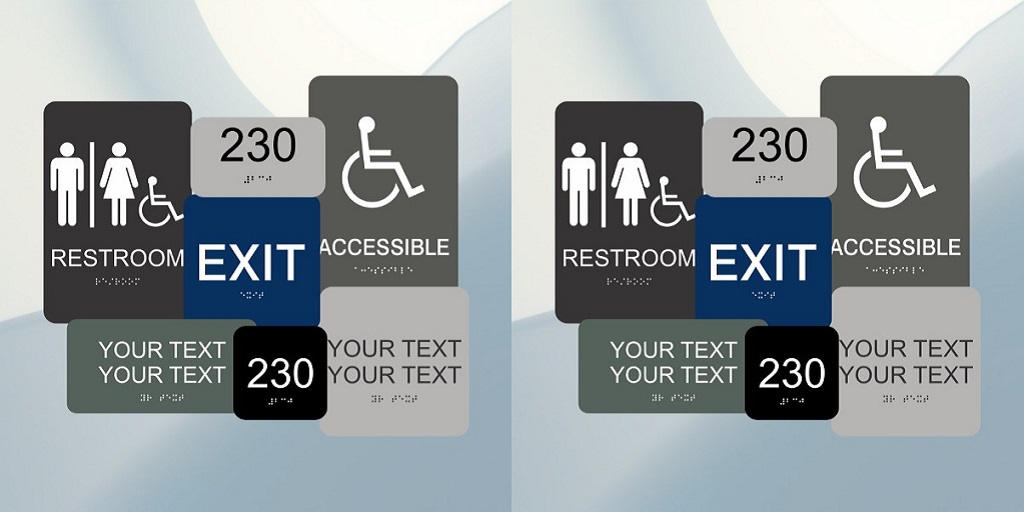
Restrooms are often the first place inspectors look. Most restaurant owners focus on the dining room and overlook the hallway leading to the bathrooms, which is exactly where compliance failures tend to occur. Restroom Braille signs covering gender-specific and single-occupancy spaces are a baseline ADA requirement, not an optional upgrade. Specs are exact: tactile signs must be 60 inches from the centerline, on the latch side of the door, with Grade 2 Braille, specific character heights, and a non-glare finish. Miss any one of those requirements and the sign fails, no matter how professional it looks.
Every other permanent space matters too. Private dining rooms, staff storage areas, manager offices, utility rooms: any room with a fixed, permanent use requires ADA-compliant signs, and that list gets longer than most owners expect. Custom braille signage in a restaurant context covers significantly more of the building than owners typically plan for, and the gaps are exactly what a compliance review will find.
Are Your Braille Signs the Kind That Pass a Real Compliance Check?
The test that counts isn’t the one that feels official. It’s a person walking through the space with a measuring tape and a camera, not a government inspector with advance notice. A compliance reviewer checks accessible signage against specific ADA measurements, and the margin for error is zero: an eighth of an inch off on mounting height is still a violation, a font with serifs that interfere with touch reading is still a violation, Braille signs that a general supplier produced without certified Braille translation are still a violation.
Wayfinding signs ADA requirements apply anywhere guests or staff need directional cues to permanent spaces inside the building: emergency exits, accessible restrooms, back-of-house areas with restricted access. A sign pointing to a permanent space almost certainly falls under the code. Restaurant owners who aren’t sure which of their signs the code covers should assume it’s most of them.
Restaurant owners who assumed their signs were compliant because they looked right or because the packaging said “ADA compliant” should verify that assumption. A printed label doesn’t confirm Braille accuracy or proper installation.
What Getting Your Braille Signs Right Actually Looks Like
Compliant signage starts before anyone places the order. Someone has to know which spaces require permanent identification under ADA rules, what character height the code requires for each sign type, which Braille grade applies, and how the finish type affects compliance during inspection. None of that information is obscure or hard to access. What’s missing in most noncompliant restaurants is the step where someone actually checks.
Tactile signs with accurate Braille and correct installation reduce legal exposure. They also communicate something specific about how a business operates. A restaurant that installs signage correctly in back corridors, utility rooms, and the hallway outside the bathrooms, spaces most guests never think about, tends to get a lot of other invisible details right too.
Braille Sign Pros works with restaurants to produce custom signage that meets current ADA standards, including every category of Braille signs your space requires. If you’re not certain your current installation would hold up under a formal compliance review, that’s a practical question worth answering now, before someone else does.
For more information about Custom Ada Signs and Restroom Signs With Braille Please visit: Braille Sign Pros LLC.
