
Tautog, also known as blackfish and more commonly (and simply) as “tog” are among the Northeast angler’s favorite cold-weather quarry.
Now here’s something you didn’t know. Slow pitch jigging for tog is on the rise. Sure, scores still swing over the gunwales each November and December on crabs, but anglers are increasingly choosing metals – specifically jigs like slow pitch jigs – to target them.
Here’s what you need to know, from a very high level.
Find the Fish
First things first, you need to find them. Truth is, tog are around all year, and they actually move in close during the spring (when some states have seasons for them) but for most anglers, they target tog in the inshore shallows (and near-shore reefs and wrecks) in the months of November and December, during which they feed heavily before moving offshore to overwinter.
That’s when to find tog – but as for where? These fish love hard structure. Piling, jetties, rip-rap, submerged rocks, wrecks, reefs, and more will all hold them – and you need to get close. The tautog does not like to stray far from structure, even in pursuit of a bait.
Tackle and Technique
If you’re going to jig for tog, braid is the name of the game. It has zero stretch and you’ll want that for two reasons: sensitivity (tog are light biters) and to winch fish away from structure. Lines in the 10 to 30 lb class will be more than enough for most tog.
As for the outfit itself, light and medium weight and action rods and reels work just fine.
It’s important to remember that slow pitch jigging is not like speed jigging. Here, it’s all about the graceful fluttering of the jig, and the vibrations it sends through the water, an action that induces a fish to strike – all other notes apply.
You will want to get right off (or right over) the structure haunted by tog, then make sure that your presentation is as near to vertical as the conditions allow.
Drop the jig into the target zone within the water column (right over structure) and lift and lower the rod tip to sweep the jig up through the water column before allowing it to fall. Most strikes will occur on the drop.
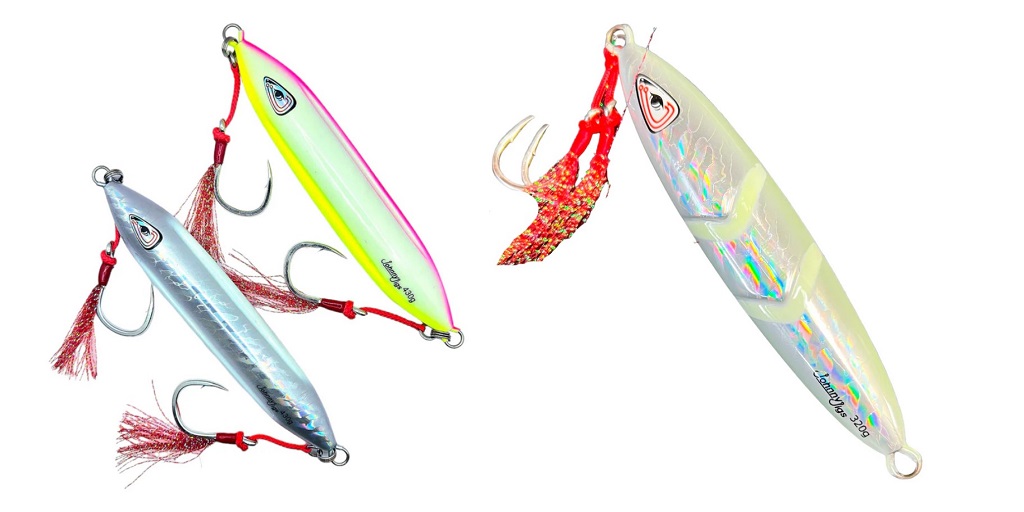
The great thing about slow pitch jigging is the versatility. Bait anglers lose a lot (a lot) of crabs on tipped jig heads. With a slow pitch jig, you can swap out the hooks for options with a narrower gap and a longer shank that can assist with the set and help prevent break-offs.
And, for those that like to tip jigs? Check out some of the Baku jigs available online at Johnny Jigs. These can be tipped with a crab quarter and fished much like conventional bait rigs – but fishing bait on a jig head for a tog offers better sensitivity (much of the time) than a dedicated bait right like a tautog or high-low rig.
Gear Up at Johnny Jigs
Ready to investigate some slow pitch jigs and outfits for togging? Check out Johnny Jigs, the definitive name in the growing discipline of slow pitch jigging. You can also visit their official YouTube channel (through their website) or contact them directly if you have questions about tackle, presentation, or other techniques before you shove off.
