
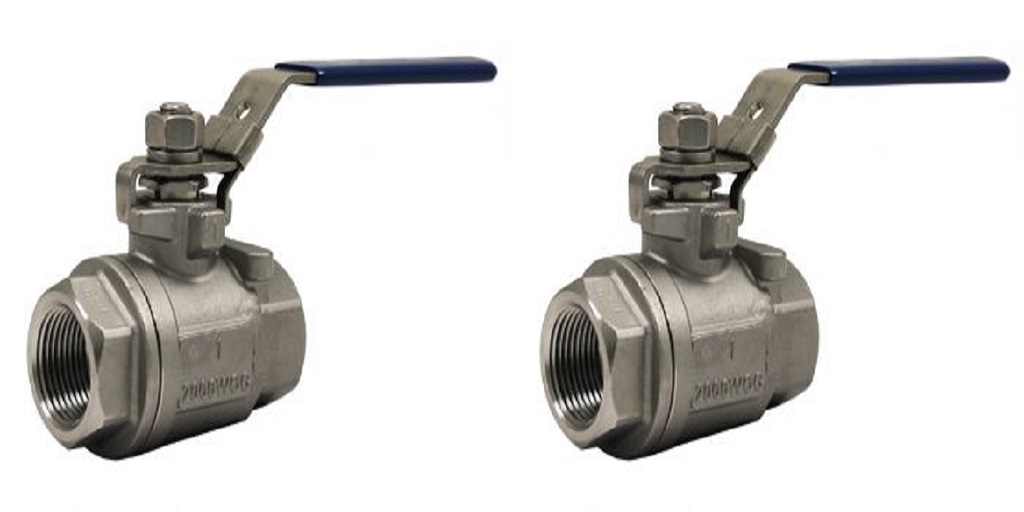
Their simple construction and even more intuitive operation in applications in which “on/off” utility is necessary make ball valves highly desirable in a wide range of industries.
But no two ball valves are alike, and one of the most important considerations to make for serviceability has to do with material composition.
Many high-quality ball valves are made of stainless steel – but what specific benefits do SS ball valves confer? Let’s take a closer look.
Strength
A common stainless steel alloy from which ball valves are made is 316, which contains between 16% and 18% chromium, between 10% and 14% nickel, and a smidge of molybdenum, at 3%. It is a very strong, fairly hard alloy that is superior in strength and wear resistance to common alternatives like brass, making it preferable in hard-use applications and those in which a higher pressure rating is necessary.
Temperature Resistance
Stainless steel is, on the whole, more stable under higher temperatures than other metal alloys like plastic, aluminum and brass. This makes it preferable in both very hot and very cold applications.
Chemical Stability/Corrosion Resistance
The high concentration of chromium in stainless steel makes it uniquely suitable in situations in which harsh chemicals and corrosive agents will be present. Stainless steel is also often the preferred material in marine environments. It is also more stable under these influences in the long term. By contrast, brass occasionally undergoes a chemical process called dezincification, by which zinc leaches out of the alloy, leaving only corrosion-prone copper behind.
Wider Range of Applications
Another consideration is that SS ball valves are commonly rated for use in the food and beverage industry because they can be safer than alternatives like brass, which is only suitable for use in such scenarios if it is FDA-approved for the application and is lead-free.
In Which Industries/For Which Applications Are Stainless Steel Ball Valves Appropriate?
Because of the unique benefits and attributes mentioned here, SS ball valves can be widely used in a large range of industries and applications, including:
● Food and beverage industries
● Brewing industries
● Pharmaceutical industry
● Oil and gas
● Marine applications
● Power processing
● Manufacturing
● Wash systems
● And more
Are There Any Downsides to SS Ball Valves?
Considering the fact that this is relative, no. However, it should be noted that SS ball valves are more expensive than most other ball valves, including plastic and brass ball valves. Stainless steel is also harder and less forgiving, making the establishment of connections (typically) more labor intensive.
Seeking High-Quality SS Ball Valves Online?
Looking for high quality SS ball valves that are rated for use in a wide range of applications? Put Proflow Dynamics on your radar. They carry a wide variety of 1, 2, and 3 piece stainless steel ball valves with Female NPT threads, rated to 1000 PSI, with PTFE seals and seats, and which have blowout-proof handle seats and locking levers.
You can learn more on their website or contact them at Sales@ProflowDynamics.com.
