
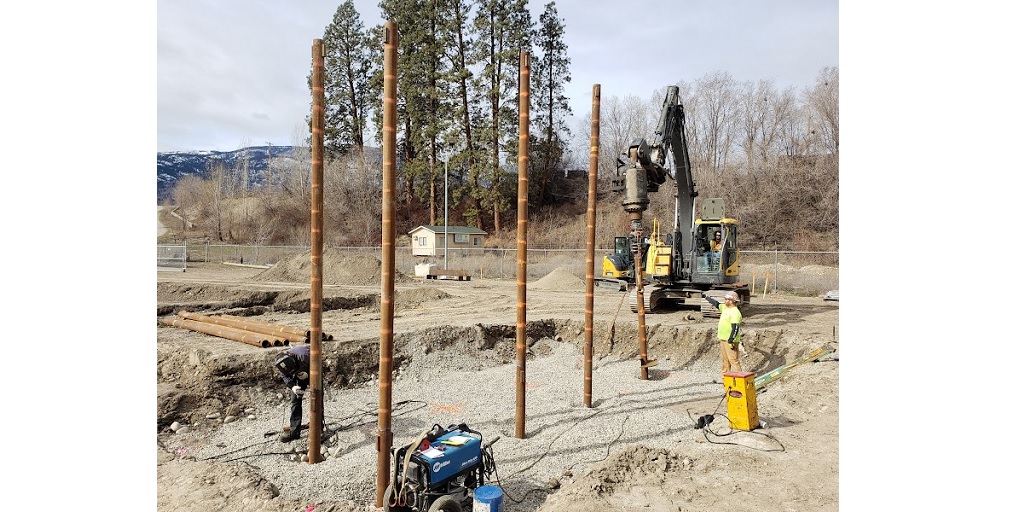
Helical piles, also known as screw piles or helical anchors, have emerged as a versatile and efficient foundation solution in construction projects worldwide. Their unique design and installation process offer several advantages over traditional methods, making them increasingly popular in various applications.
In this comprehensive guide, we’ll delve into the advantages, applications, and installation of helical piles, providing valuable insights for professionals and enthusiasts alike.
Advantages of Helical Piles
Helical piles offer several advantages that make them an attractive choice for foundation support:
Versatility: Helical piles can be used in a wide range of soil conditions, including soft soils, clay, sand, and even rocky terrain. Their adaptability makes them suitable for various construction projects, from residential buildings to industrial structures.
Quick Installation: Unlike traditional foundation methods that require extensive excavation and curing time, helical piles can be installed rapidly using hydraulic machinery. This reduces construction time and minimizes disruption to the surrounding environment.
Load-Bearing Capacity: The helical design of these piles allows them to efficiently transfer loads to deeper, more stable soil layers. This results in higher load-bearing capacity compared to other foundation systems, making helical piles ideal for supporting heavy structures.
Environmentally Friendly: Helical piles require minimal excavation, which reduces soil disturbance and minimizes the generation of construction waste. Additionally, their installation process generates minimal noise and vibration, making them suitable for environmentally sensitive areas.
Applications of Helical Piles
Helical piles find applications in various construction projects, including:
Residential Construction: Helical piles are commonly used in residential construction for supporting foundations of single-family homes, multi-story buildings, and townhouses. Their ability to withstand high loads makes them ideal for stabilizing structures in regions with expansive or weak soils.
Commercial and Industrial Projects: In commercial and industrial construction, helical piles are used to support foundations of warehouses, factories, office buildings, and retail centers. Their quick installation and high load-bearing capacity make them a cost-effective solution for projects with tight schedules and heavy structural loads.
Infrastructure Development: Helical piles are also utilized in infrastructure projects such as bridges, highways, and telecommunications towers. Their versatility and adaptability allow engineers to overcome challenging soil conditions and construct durable foundations in diverse environments.
Installation of Helical Piles
The installation process of helical piles involves the following steps:
Site Assessment: Before installation, a thorough site assessment is conducted to evaluate soil conditions, determine load requirements, and plan the layout of helical piles.
Preparation: The installation area is cleared of debris, and any obstructions are removed to facilitate the installation process.
Pile Installation: Using hydraulic machinery, helical piles are screwed into the ground to the desired depth. Torque measurements are taken during installation to ensure proper bearing capacity.
Bracket Attachment: Once the piles are installed to the required depth, load-bearing brackets are attached to the piles to support the structure above.
Final Adjustment: The installed piles are checked for alignment and elevation, and any necessary adjustments are made to ensure the stability and integrity of the foundation.
Conclusion
Helical piles offer a versatile, efficient, and environmentally friendly solution for foundation support in various construction projects. Their advantages, applications, and installation process make them a preferred choice for engineers and contractors seeking reliable and cost-effective foundation solutions.
How Atlas Piling Can Help You
Atlas Piling, a leading provider of helical pile solutions, offers comprehensive services to meet your foundation needs. With expertise in site assessment, pile installation, and structural support, Atlas Piling ensures the successful completion of your construction project. Contact them today to learn more about how helical piles can benefit your project and to discuss customized solutions tailored to your specific requirements.
