
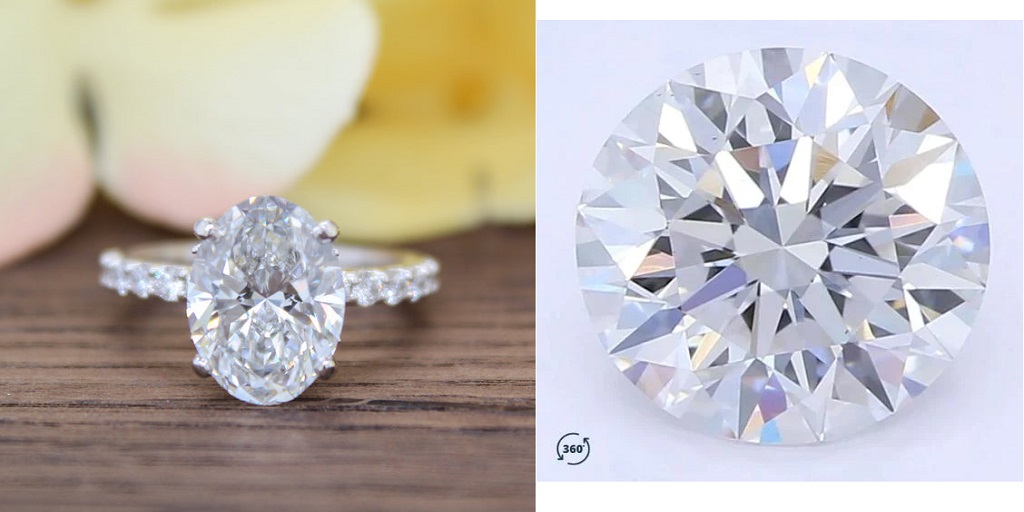
Lab-grown diamonds have gone from a fringe alternative to the default choice for a majority of buyers. In 2026, roughly 61% of U.S. engagement ring center stones are lab-grown, up from about 52% just two years earlier. That change didn’t happen by accident.
Here are the four reasons shoppers are looking for the best lab-grown diamonds available as an alternative to natural ones.
1. The Same Diamond for a Fraction of the Price
The number that drives most decisions is the price tag. A 1-carat lab-grown diamond now sells for 60–85% less than a natural stone of identical specs. A high-quality 1-carat natural round runs roughly $4,200–$6,500 at retail, while the lab-grown equivalent often lands between $800 and $1,400.
What makes this so compelling is that you aren’t sacrificing anything optically. Lab-grown and natural diamonds are both pure crystallized carbon, with the same hardness (10 on the Mohs scale), the same refractive index, and the same fire and brilliance. The only difference is origin: one formed underground over billions of years, the other grew in a controlled lab in a matter of weeks. Neither passes as anything other than a real diamond, because both are real diamonds.
2. A Bigger, Better Stone for the Same Budget
Because the savings are so dramatic, buyers are redirecting their budgets rather than just spending less. The average lab-grown center stone has jumped from about 1.31 carats in 2019 to 2.45+ carats in recent years. A $3,000 budget that buys a half-carat natural diamond can buy a 2-carat lab-grown stone instead.
The quality is climbing too. Controlled growth conditions make it easier to produce colorless, high-clarity stones, and the share of colorless lab-grown diamonds sold has risen sharply over the past few years. That’s why so many shoppers browsing loose lab-grown diamonds gravitate toward D–H color and VVS–VS clarity in larger carat weights—grades that would be cost-prohibitive in a mined stone of the same size.
3. An Ethical, Conflict-Free, Lower-Impact Choice
For a generation that researches before it buys, sourcing matters. Lab-grown diamonds are the only diamonds that can be guaranteed 100% conflict-free, with no connection to the mining supply chain. They also carry a meaningfully smaller environmental footprint—producing a stone in a lab avoids the land disruption, habitat loss, and heavy resource extraction tied to mining.
Two-thirds of Gen Z engagement ring buyers now choose lab-grown, and ethics and sustainability rank near the top of their reasons. For these shoppers, a lab-grown diamond isn’t a compromise. It’s the option that aligns with their values without giving up beauty or durability.
4. Mainstream Acceptance and Wider Selection
A few years ago, choosing lab-grown meant explaining your decision. Today it’s the norm. With lab-grown diamonds making up the majority of engagement rings and showing up regularly on red carpets, the perception has shifted from “alternative” to “modern luxury.”
That acceptance comes with practical perks. The same trusted labs—GIA and IGI—certify lab-grown diamonds using identical grading criteria, and every stone is laser-inscribed with its report number. Wider supply also means deeper inventory: more shapes, more sizes, and more high-grade options to choose from when you’re shopping for a loose stone.
Find The Best Lab Grown Diamonds Online
Lab-grown diamonds offer the same beauty and durability as mined stones, for a fraction of the cost, with a cleaner conscience and broader selection. For most buyers in 2026, that combination is simply hard to beat. For the best lab grown diamonds out there, we recommend visiting Mikado Diamonds. They have a generous selection and the top trending styles.
For More Information About Ready To Ship Engagement Rings and Lab Grown Cushion Cut Diamond Ring Please Visit: Mikado Diamonds.
