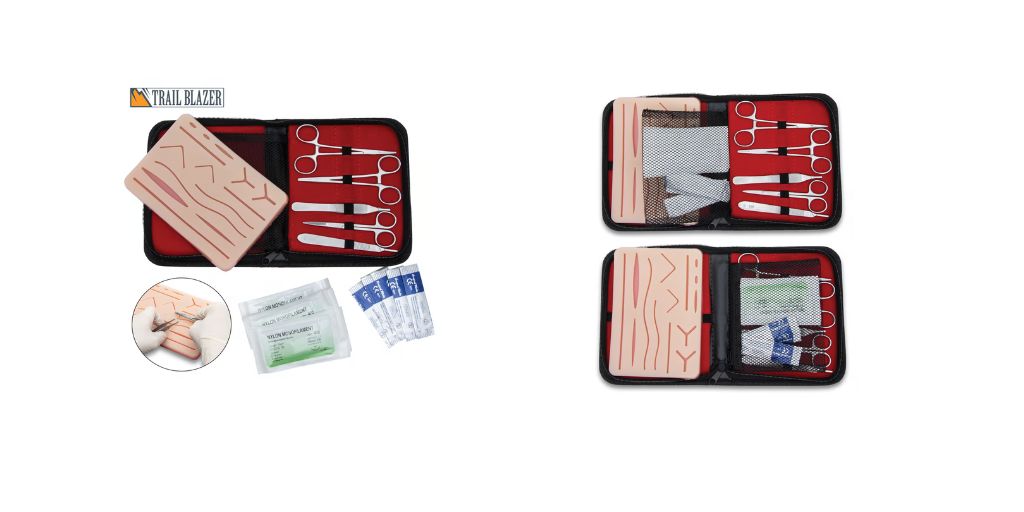
Emergency kit is slightly nonspecific as a term, because there are many different types of emergency kits. Some kits are for roadside assistance, others are for first aid, others are for more traumatic sorts of situations. Then there are emergency kits that are more like bug-out bags, helping ensure the safety and security of a user who is forced to stay put under adverse conditions.
With that said, here’s a primer on what most emergency kits should contain.
Emergency Kit Contents
What an emergency kit should contain depends on the type of kit, so we’ll break down a few different types here.
Emergency kits for first aid should contain:
- Bandages
- Topical antiseptic
- Gauze
- Medical tape
- Sting relief
- Signaling device
- Tweezers
- Scissors
Emergency kits for trauma or first responders should contain:
- Bandages
- Swabs
- Gauze
- Medical tape
- Sting relief
- Topical antiseptic
- Calamine/itch/sting relief
- Splits
- Cotton swabs
- Tongue depressors
- Butterfly strips/sutures
- Gloves
- Instant ice
- Bleeding control
- Burn dressings/treatment
- CPR masks
- Scalpels
- Hemostat
- Stethoscopes
Emergency kits for survival are a little bit different. These should contain:
- Water treatment or purification products
- MREs (food)
- Stoves and fuel
- Fire starters
- First aid essentials (as listed above)
- Signalling and emergency communication devices
- Flashlights and batteries
- Emergency blankets
- Hygiene kits
- Diversions (card games, etc.)
Keep in mind that all different sorts of emergency kits might contain very different essentials, so if you want one for a very specific set of conditions, make sure you read the list of contents before buying.
When and Where You Should Pack an Emergency Kit
The emergency kit you decide to purchase, pack or carry should be dictated by the conditions you expect to face. For instance, as a first responder, you’ll want to carry a very different kit from what you’d want in your trunk if you hunted the backcountry in the winter. At the same time, both individuals could benefit considerably from having a kit on hand.
Where you carry it will also vary according to and depending on your goals. Good places in the home include in the bathroom or under the sink or bed, though in the kitchen or office can be a good location as well. Basically you want it to be in a central locale so you have easy access to it if and when disaster strikes.
You should also pack a small emergency kit that will be on you whenever you’re away from home. A small first aid kit should go with you on all your travels, though this might understandably be smaller than a full sized kit.
Larger emergency kits are easier to store under the seat of a vehicle, or in the trunk of a car. You should never leave home without some measure of emergency preparedness in place.
This goes for hikers, campers and boaters, as well. You should bring a small survival kit with you on the trail, and all boaters should have emergency kits, with first aid and signalling and emergency communication essentials, in place and easily accessible on the vessel. It’s also worth a note that the United States Coast Guard has specific requirements for boaters in place.
Where to Get an Emergency Kit?
Regardless of the type of emergency kit you’re considering getting – or if you plan on getting more than one and stashing a few around the home or in the car – you can get what you’re looking for over at CH KADELS.
Visit their website to explore a wide range of different first aid, first responder, emergency kits, survival packs and bug out bags. You might even find a few things that you weren’t expecting – stock up there.
For more information about disaster survival gear and waterproof matches Please Visit : CH Kadels