
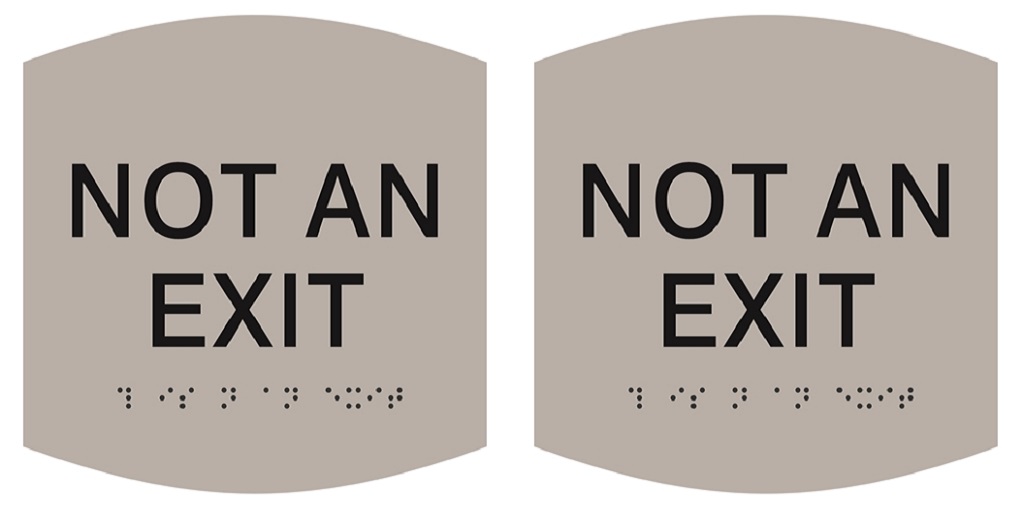
ADA-compliant exit signs have become part of how tenants judge a building’s overall quality, even if they don’t consciously think about it. Today’s tenants look beyond square footage and finishes. They pay attention to how a space functions, how safe it feels, and whether it reflects care in the details.
Accessibility now sits firmly inside those expectations.
Professionalism Shows Up in Small Details
Modern buildings are expected to work smoothly for everyone who uses them. That includes visitors, employees, contractors, and clients with different mobility and sensory needs. Tenants may not audit a building against a checklist, but they notice when spaces feel considered.
Clear exit signage plays a role in that impression. Signs that are easy to locate, consistently placed, and accessible through tactile text and Braille quietly signal that the building is managed with intention. When those elements are missing or inconsistent, it creates friction, even if tenants can’t immediately name why.
Over time, those small signals influence how people feel about the space.
Accessibility as a Trust Factor
To earn a tenant’s trust in a shared business space, they need to know the building can handle the day-to-day activities and, more importantly, emergencies. A huge part of that is being ready for anything, especially having clear, easy-to-see exit signs that work for everyone, including those with disabilities (ADA-compliant).
When things get stressful, those ADA-compliant exit signs in stairwells, hallways, and common areas are essential for getting everyone out safely. Seeing those signs proves that the building management is reliable and really cares, which makes tenants feel a whole lot more secure.
Modern Tenants Notice Consistency
If a building is older or has had a bunch of renovations, things can get inconsistent. Like, you might have a super modern lobby right next to stairwells with seriously outdated signs. A tenant floor may look polished, but secondary exits tell a different story.
Modern tenants notice these contrasts. They expect coherence across the entire building, not just the visible areas. Accessibility features that feel like afterthoughts undermine the professionalism property teams work hard to create.
Consistent exit signage across all levels and exit routes sends a clear message. This building doesn’t just look modern. It operates that way.
Exit Signage Supports Everyone, Not Just Compliance
There’s a misconception that accessible exit signage serves only a small group of people. In reality, it benefits far more.
Tactile and clearly designed exit signs help people orient themselves in unfamiliar spaces. They provide reassurance during emergencies. They reduce hesitation and confusion when time matters.
For tenants hosting clients or employing diverse teams, these details contribute to a workplace that feels inclusive without drawing attention to itself. Accessibility becomes part of the building’s baseline quality, not a separate feature.
Expectations Are Shaped By Experience
As more buildings prioritize accessibility, tenant expectations continue to rise. What once felt optional now feels standard. Tenants compare spaces, whether consciously or not, based on how well they support everyday use and emergency readiness.
Buildings that fall behind on these details risk feeling dated, even if their interiors are recently refreshed. Exit signage that lacks accessibility features can quietly signal that other aspects of building care may also be behind the curve.
A Practical Approach for Property Teams
For property owners and facility managers, addressing exit signage doesn’t require dramatic changes. It starts with reviewing exit routes the way tenants experience them, from main corridors to stairwells and secondary exits.
Are the signs consistent? Are they accessible? Do they align with current expectations rather than past standards?
Handling these elements proactively reduces the need for rushed updates later and helps maintain tenant confidence over time.
For teams looking to align safety details with modern accessibility expectations, providers like Braille Sign Pros offer solutions designed for commercial environments where professionalism and compliance need to work together.
Because in modern buildings, tenants don’t just lease space. They place trust in how that space protects and supports them, and that trust is often reinforced by details as practical as ADA-compliant exit signs.
