
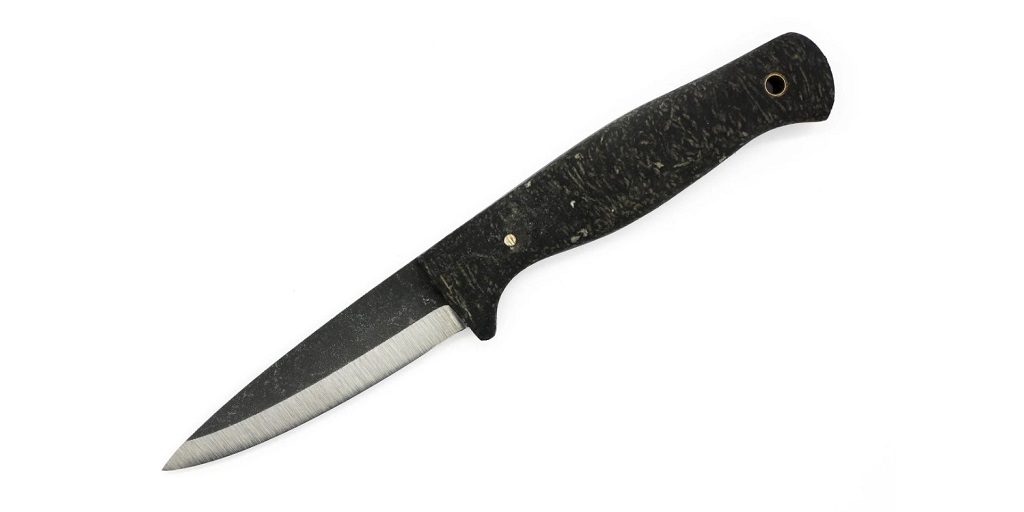
For those of you just getting into collecting knives, or dipping your toes in the water of the world of outdoor sports and hobbies like bushcraft, camping, hiking, hunting, or prepping, it won’t be long before you learn there is a world of nuance in how knives are categorized.
And not just in terms of blade profile. The difference between a skinner and a filet knife is easy enough to see. But once you start getting into terms like “camp knife”, “tactical knife”, “fighting knife” and “survival knife”, among others, things get a little hazy.
This is especially true when it comes to the distinction between a camp knife and a survival knife, and looking at collections of the two, at a certain point you might be thinking, “What’s really the difference between these?”
This short post will help break down some of those details.
The Main Thing: Size
One might tell you that a camp knife is used for camp chores whereas a survival knife is used for survival applications like building a fire, constructing traps, or cleaning small fish or game.
That is not untrue, but considering the fact that establishing a campsite is part and parcel of survival, the definition is not that helpful.
Therefore we introduce the main aspect of a camp knife that distinguishes it from most survival knives, and that is size.
Most camp knives are fairly large, so large in fact that they straddle the borderline of what might rightly be called a machete.
This is because most camp knives are designed to help clear areas, construct basic camp furniture, and prepare fire rings, among other brusque tasks that are commonly needed around a campsite.
As a result, most camp knives are made with fairly utilitarian blade profiles, like drop points, spear points, and even cleaver profiles. That said, a knife does not need to follow this maxim to be rightly called a camp knife.
Survival knives are equally utilitarian and are used for many of the same applications, but they tend to be just a bit smaller than camp knives, so that they are lighter and easier to pack and carry, especially when a loadout is limited in terms of how much weight it can total.
What Are Camp and Survival Knives Used for?
Camp knives are generally used for camp chores such as:
- Clearing campsites
- Constructing camp furniture
- Prepared fuel for fires
- Food preparation
Survival knives are used for many of the same tasks, including:
- Food prep
- Firecraft
- Cleaning harvests
Since there is so much crossover, it is important to recognize that a knife might simultaneously fill the role of either a camp knife or a survival knife.
Important Takeaway: There Are No Hard or Fast Rules Here
At the end of the day, what’s termed a camp knife versus a survival knife is often a product of whatever the manufacturer wants to call it. Often brands will call certain products a camp knife or a survival knife based on their own criteria.
Because of this, there isn’t really an accepted industry standard for either of these terms. Don’t get lost in the weeds. Just get a knife that can do what you need it to based on its size, features, blade profile, steel, and other characteristics.
Here for a New Camp Knife?
Whether you’re here for a camp knife or a survival knife or something else, you can get it online at The Knife Connection. They represent the best brands in the business and carry scales and sheaths too. Visit their website or get in touch with them directly for more information.
