
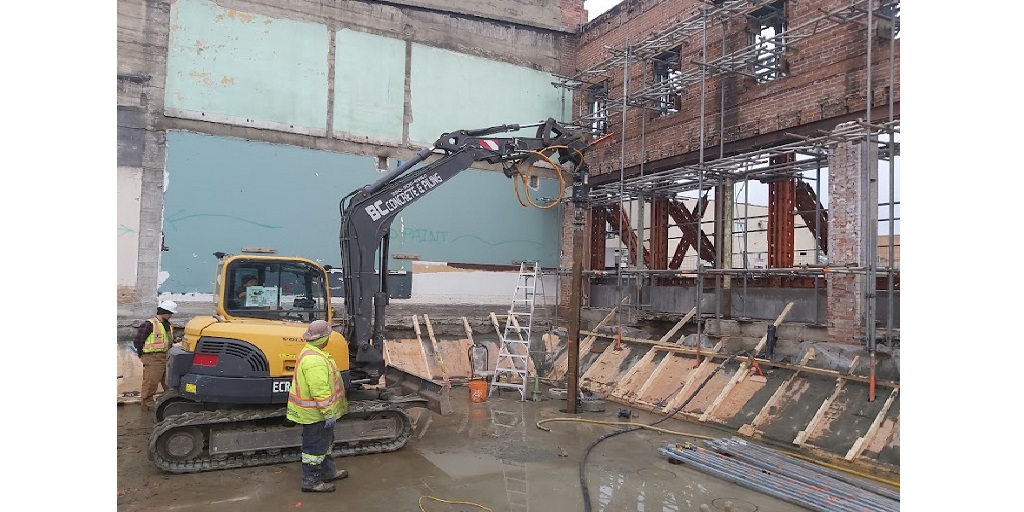
When a building starts to sink or shift, time becomes your biggest enemy. Structural damage gets worse fast, cracks spread, doors stick, and the value of the property can take a major hit. If you’re facing a situation like this—whether it’s a home, commercial facility, or industrial site—you’re probably wondering: What’s the fastest, most effective way to stabilize it?
For many property owners and builders, the answer lies with helical pile contractors—and for good reason. These professionals are delivering efficient, low-disruption solutions that work across a wide range of soil and structural conditions. But how exactly do they do it so quickly, and what makes them the go-to choice when time and stability are both critical?
Let’s break it down.
Speed Without Sacrificing Safety
One of the top reasons builders and engineers rely on helical pile contractors is speed. Traditional foundation repair methods like concrete underpinning can take weeks to complete, require heavy equipment, and often involve excavation that causes chaos on-site.
By contrast, experienced contractors using helical piles can mobilize quickly, work with minimal equipment, and often complete installation in a matter of days—sometimes even in just one or two, depending on the scope. There’s no need to wait for concrete to cure, which drastically shortens the project timeline.
This quick turnaround is especially important for structures in active use—like commercial buildings, homes, or public spaces—where downtime equals lost revenue or disrupted lives.
Precise Installation and Instant Load-Bearing Capacity
Speed is important, but not at the expense of reliability. That’s where helical pile contractors shine. Their work involves torque-monitored installation, which gives real-time feedback on the capacity of each pile as it’s installed. This level of control ensures the piles reach appropriate depths and hit the necessary load-bearing strength immediately.
In other words, there’s no guesswork. Once installed, helical piles are ready to support weight right away—making them ideal for emergency stabilization work or fast-paced construction schedules.
Less Disruption, Especially in Tight or Urban Sites
Another key advantage? Minimal site disturbance.
Because helical piles are installed using small, maneuverable machinery, they’re perfect for tight spaces, interior work, or urban locations where access is limited. You don’t need to tear up landscaping, sidewalks, or driveways just to get to the foundation. And since the process is vibration-free and relatively quiet, nearby structures and utilities remain safe throughout the operation.
This makes helical pile contractors the smart choice for projects where protecting the surrounding environment is just as important as the repair itself.
Works Across a Wide Range of Structures
From sinking decks and porches to failing warehouse floors and industrial footings, skilled contractors know how to apply helical pile technology across different use cases. They’re not just a solution for homes—they’re often used to stabilize commercial buildings, bridges, boardwalks, retaining walls, and even telecommunications towers.
This flexibility allows helical pile contractors to respond quickly to a broad spectrum of foundation issues, offering long-term solutions with short-term impact.
If you’re dealing with a sinking structure, time matters—but so does precision. More builders and property owners now rely on experienced helical pile contractors for fast, low-disruption solutions. Their approach isn’t flashy, but it’s proven and effective. And when the ground beneath you is shifting, dependable results are exactly what you need to move forward.
