
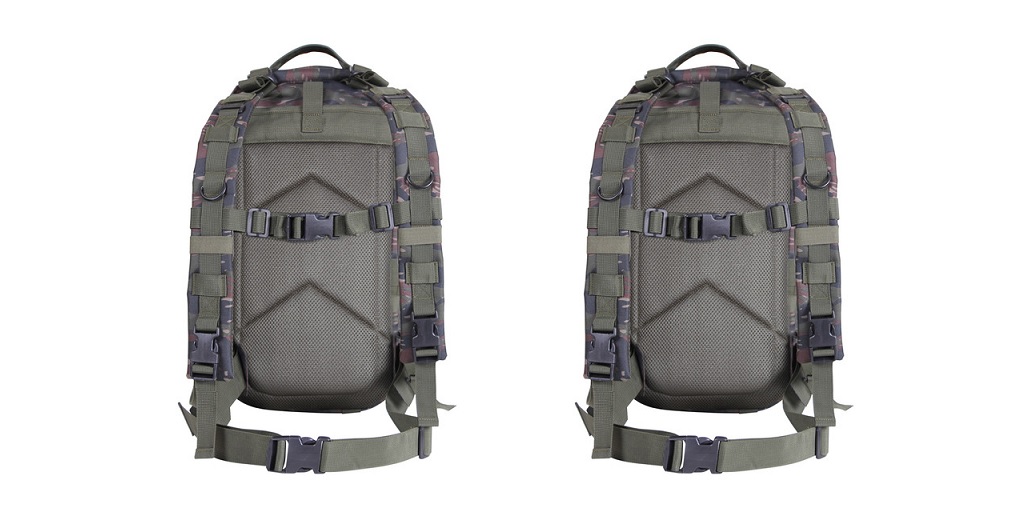
Tiger stripe camo, a camo pattern heavily associated with the Vietnam War, is a pattern that predominantly uses broad, horizontal macros – stripes, not unlike those of a tiger, hence the name – in shades of green, black and brown.
It is said that this was a refinement on an earlier French pattern, the Lizard pattern, which was used in Indochina during the colonial period, to some success.
For many, tiger stripe camo is for reenactors, collectors and general history buffs, especially those with an interest in the Vietnam era. For others, it may still prove an effective pattern, especially in the scenarios described here.
The Bigger Sense of Viability
One of the most attractive aspects of the original tiger stripe camo patterns is the predominant color scheme. With macros in browns, black and greens, it’s capable of accommodating thickly vegetated areas, especially those with a dark backdrop.
This makes it suitable for use in areas that are forested so thickly that the sun is effectively blocked out. It makes sense why and how this was used in the jungles of southeast Asia.
With that said, this is only one element of tiger stripe patterns that make them suitable for use in the woods.
It’s Not Just About the Color, but the Pattern
As with any camo pattern, color is only half of the picture. The shape and arrangement of the macros and micros all increase the noise to signal ratio, making it hard for a viewer to truly discern what he or she is looking at.
In the case of tiger stripe, as was the case of its predecessor Lizard pattern, the macros are big, broad slashes. These slashes do not look unlike the broad leaves of thick foliage. In fact, the surface of tiger stripe camo is slashed and mottled very much in the way that dense jungle cover is.
Naturally this is well-suited to use in thickly forested areas, but specifically those with dense ground cover and mostly deciduous trees with large, broad leaves. In areas where there is sparse ground cover, even if there is a thick canopy, there are probably better patterns.
In fact, it is probably not the best pattern in any area in which there is not a lot of ground cover, if the main shades of the earth are light tan, or if the main species of trees are coniferous rather than deciduous.
But, all the same, in the summer months, tiger stripe camo can still be valuable for outdoorsmen that pursue their craft in areas where there is a lot of thick foliage near the ground.
Then, of course, it still has value for collectors and reenactors, as well as marginal utility for fashion purposes. There are plenty of modern tiger stripe camo patterns in colors other than the originals, with blue, black, gray and even pink coloration. These can be used for fashion and form rather than function, as they will offer little in the way of concealment.
Where to Get Tiger Stripe Camo Gear
There are still some manufacturers and retailers that sell historically relevant camouflage patterns, like tiger stripe. You just need to know where to look.
One of the best of these is Fatigues Army Navy, which sells a wide range of tiger stripe camo clothing and other gear, as well as tiger stripe in modern color schemes. To learn more about this unique camo pattern or to see what they have in stock, visit their website. You can also contact them directly at 877-612-1253 if you have any questions before you buy.
