
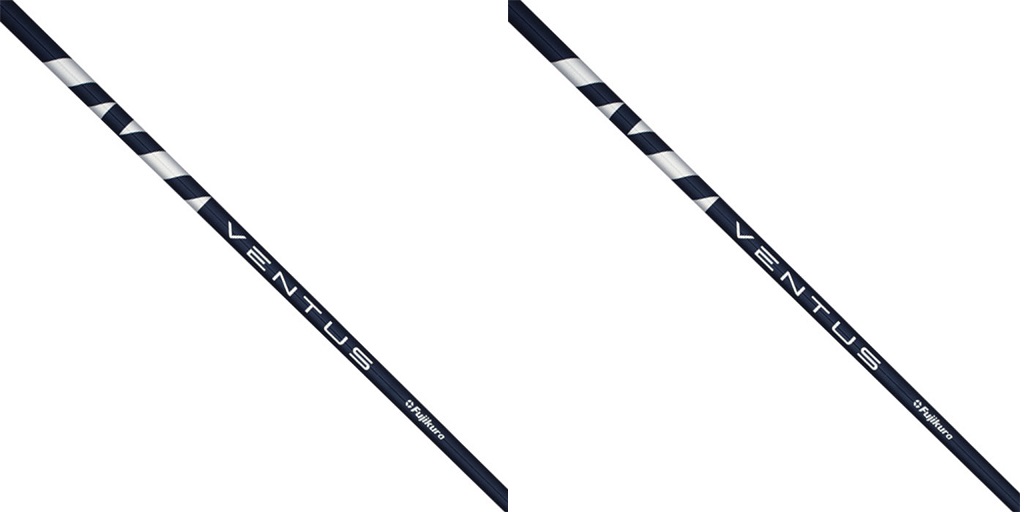
Fujikura Ventus driver shafts, stabilized with VeloCore Technology, a multi-media bias core that helps stabilize the shaft and prevent ovalization and deformation through the swing sequence, are some of the most popular shafts that have hit the market in recent years. Like Autoflex golf shafts and TPT shafts, they have developed a certain mystique that has garnered them great clout in the sport.
But, as in all things, there is no one-size-fits-all solution. So how do you know which Fujikura Ventus shaft is right for you?
Well, it comes down to two things, mainly. One is your swing speed. The other is the color of the shaft, which is an indicator of the performance the shaft was engineered to deliver.
For Players with Lower Swing Speeds
The first thing we have to take into account is your swing speed. For players with slower swing speeds – anyone who’s just starting out, younger players, amateurs, ladies, seniors and others, the first Ventus shaft to check out is the Ventus Red.
Available with stiffness ratings from regular to extra-stiff, the Ventus Red offers mid to mid-high launch profiles paired with medium spin, which offers just a smidge of extra carry distance for players that might not be able to get there with strength and speed alone.
Conventionally, this was your only option, but there is a new player in the Ventus profile – the Ventus White. In regular and stiff configurations, the Ventus White produces mid launch and mid-high spin characteristics, with a low bend point.
But the best part about the Ventus White is that it is a very, very light shaft – all three profiles weigh a scant 49.5 grams. That gives players with slower swing speeds a bit more leverage when trying to generate higher club head speeds.
For Players with More Aggressive Swing Speeds and Tempos
Now, if you’re on the other end of the spectrum, and you have a strong, fast swing speed and aggressive tempo, the Ventus Black is the one to look into.
Available only in stiff and extra stiff profiles, the Ventus Black is a low-low shaft across the board, producing remarkably low launch and spin.
These characteristics help prevent high launch and spin from muddling accuracy through higher shot dispersion – a bonus for players with faster swing speeds.
Another key here is the VeloCore Technology, which stabilizes the shaft and helps prevent deformation even during powerful, aggressive swing cycles.
All in all, though, if you have a very fast swing speed or tempo, the Fujikura Ventus is likely best for you.
For Everyone Else: Work with a Fitter to Find the Best Fujikura Ventus Match
If you’re somewhere in the middle, then the Ventus Blue, which is less aggressive than the Black, might be for you – but the safest and most practical thing for you to do would be for you to work with a golf club fitter.
Get in touch with one (Dallas Golf Company’s fitters are very knowledgeable and helpful) to find the right Ventus for you today.
For more information about Best Golf Shafts and Autoflex Golf Shaft Please visit: Dallas Golf Company Inc.
