
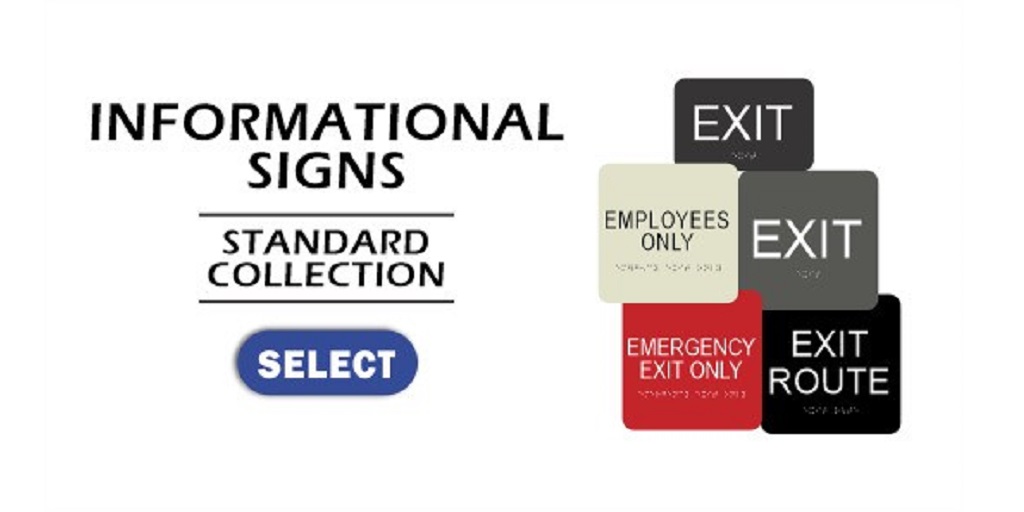
California’s ADA enforcement climate has made accessibility signage a heavily litigated detail in commercial real estate. Plaintiff attorneys have identified signage as an easy entry point, and braille exit signs have consistently appeared on that list. Someone can spot many accessibility violations during a brief walkthrough of a facility, and California’s Unruh Civil Rights Act gives plaintiffs a financial incentive to file complaints.
The Legal Pressure Behind Braille Exit Signs
California adds statutory damages on top of attorney fees to the federal ADA framework, resulting in a pattern of targeted property inspections. Plaintiffs can identify many accessibility violations during a brief walkthrough of a facility, and California’s Unruh Civil Rights Act provides them with a financial incentive to file complaints.
ADA-compliant exit signs must meet specific standards for mounting height, visual contrast, character size, and tactile features. A sign that misses any one of those marks qualifies as a violation, regardless of whether any visitor was actually inconvenienced.
What Makes Tactile Exit Signs a Legal Requirement
ADA guidelines require raised characters and Grade 2 Braille on signs for any permanently identified room or space. Exit routes fall into that category without exception. Tactile exit signs are not an upgrade or an accessibility bonus. They are a baseline requirement, and missing braille exit signs in any exit corridor leave a property directly exposed to a complaint.
Emergency egress signs braille requirements reflect a straightforward principle: a person with a visual impairment must be able to locate an exit route without relying on sight. Emergencies do not allow time to ask for directions, and the ADA does not offer exceptions for older buildings, smaller properties, or facilities with no prior complaints on record.
Photoluminescent Braille Signs: A Smarter Approach to Braille Exit Signs
Property managers increasingly choose photoluminescent braille signs because they cover two compliance requirements with a single product. These signs charge under ambient light and stay readable when the lights go out, which is exactly the scenario where accurate exit guidance matters.
Glow in the dark braille exit signs hold up where battery-powered or wired options can fail. During a power outage or smoke-filled evacuation, a passive glow sign requires nothing from the building’s electrical system to do its job. Several fire codes and occupancy standards already point toward photoluminescent egress marking in specific building types, making an audit of your current inventory a reasonable step.
Handicap Exit Signs and Fire Exit Braille Signs Draw the Most Scrutiny
Restaurants, hotels, medical offices, retail centers, apartment complexes, and professional office buildings have all seen repeated ADA signage complaints in California. Each of those property types depends on correctly installed braille exit signs to meet baseline compliance, and each has paid for that the hard way.
Handicap exit signs and fire exit braille signs draw particular attention because they sit at the intersection of life-safety and accessibility law. A single missing or non-compliant sign in an exit corridor constitutes both categories in a single finding.
Accessible exit signage requires ongoing attention, not a one-time installation. Signs get covered during construction, swapped out by maintenance staff without checking specifications, or originally installed by contractors who did not verify ADA compliance. A scheduled audit catches those problems before a plaintiff does.
Treating Braille Exit Signs as Preventive Risk Management
Signage corrections cost far less than a settlement. Replacing or upgrading braille exit signs across a facility is a predictable, budgetable project. A single ADA complaint, by contrast, can result in demand letters, legal fees, and statutory damages that quickly exceed the combined cost of a full building audit and sign replacement. California’s Certified Access Specialist program exists specifically to help property owners get ahead of that exposure.
Braille Sign Pros carries ADA-compliant options built to current federal and California standards, so your property stays protected with properly installed braille exit signs.
For more information about Braille Signs and Stairwell Signs Please visit: Braille Sign Pros LLC.
