
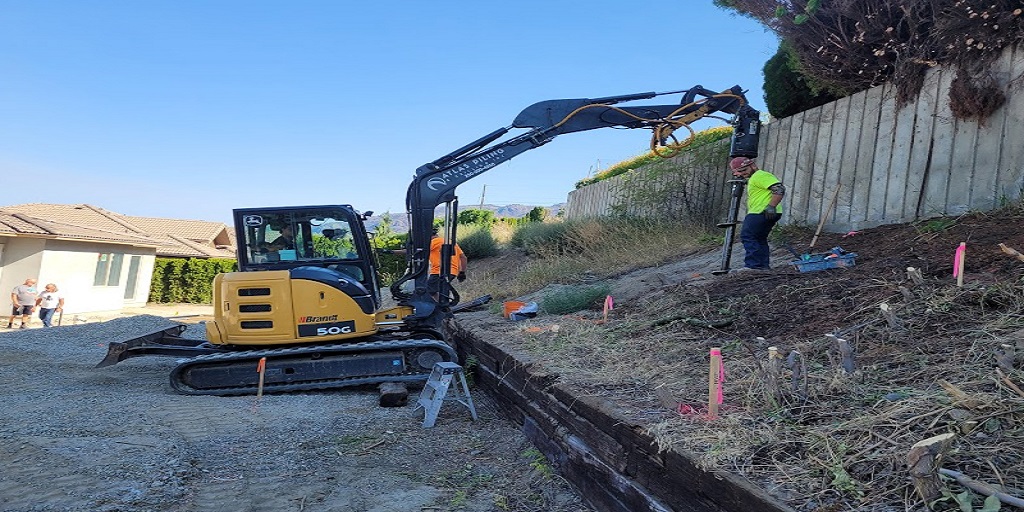
The construction industry is under increasing pressure to reduce its environmental impact. From material production to installation, every stage of a project now comes under scrutiny for its carbon footprint. Among the biggest contributors to emissions is the use of traditional concrete foundations. In contrast, many builders and engineers are shifting toward helical pile foundations, a smarter, cleaner alternative that aligns with modern sustainability goals.
Lower Manufacturing Emissions
Concrete production is one of the largest industrial sources of carbon dioxide worldwide. Every ton of cement produced releases nearly an equal amount of CO₂ into the atmosphere. In large-scale projects—especially those requiring deep or heavy foundations—these emissions can add up quickly.
A helical pile foundation, on the other hand, has a dramatically smaller carbon footprint during production. Helical piles are made primarily of steel, which, although energy-intensive to produce, is typically manufactured in smaller quantities and can be recycled repeatedly without losing strength. Unlike concrete, steel piles don’t rely on chemical reactions that release carbon dioxide during curing. As a result, the total embodied carbon of helical piles is considerably lower right from the start.
Minimal Soil Disturbance and Excavation
Concrete foundations usually require extensive excavation, soil removal, and formwork, all of which increase the use of heavy equipment and transportation. These processes consume large amounts of diesel fuel and contribute to greenhouse gas emissions.
Helical pile foundations are installed using compact hydraulic equipment that screws the piles directly into the ground. This installation method minimizes soil displacement, reduces the need for excavation, and eliminates the transportation of excess soil. The result is a cleaner, faster, and more energy-efficient process that reduces fuel use and lowers emissions on-site.
Reusability and Recyclability
One of the standout environmental advantages of a helical pile foundation is its reversibility. When a structure reaches the end of its life, the piles can be unscrewed, removed, and reused on another project. This circular approach to material use contrasts sharply with concrete, which must often be demolished and discarded, creating waste that is rarely recyclable.
Reusability means less waste goes to landfills, and fewer new materials need to be produced for future projects. For developers and engineers focused on sustainable construction, this represents a significant step toward achieving long-term carbon neutrality.
Faster Installation, Fewer Emissions
Time is also a sustainability factor. The faster a foundation system can be installed, the less energy the project consumes. Helical pile foundations can often be installed in a fraction of the time it takes to pour, cure, and backfill a concrete foundation. This efficiency translates into reduced fuel consumption for machinery, fewer worker trips to the site, and less idle time overall.
Even in challenging weather conditions, helical piles maintain their speed advantage because they don’t require curing time or dry conditions. This means fewer delays and less energy wasted waiting for ideal circumstances—another subtle but meaningful way to lower a project’s environmental impact.
A Smarter Step Toward Low-Carbon Construction
As the demand for eco-friendly construction practices continues to grow, helical pile foundations are proving to be an ideal choice for projects aiming to minimize their carbon footprint. They reduce emissions at every stage—from manufacturing to installation to end-of-life recovery—without compromising on performance or durability.
By replacing traditional concrete with helical piles, builders are not only improving efficiency but also making measurable progress toward sustainability goals. The shift to low-impact foundation systems reflects the broader movement in construction: building smarter, cleaner, and with greater respect for the environment.
For More Information About Drilling Contractor Companies and Screw Piles Please Visit: ATLAS PILING.
