
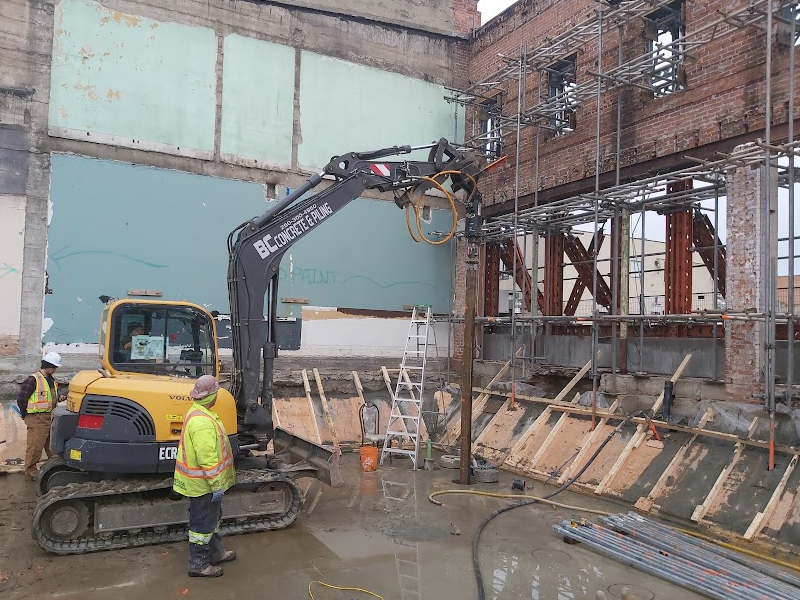
Basement underpinning projects are becoming increasingly complex as homeowners look for ways to maximize living space, stabilize aging structures, and protect properties from shifting soil conditions. Traditional methods of underpinning often involve heavy excavation, long timelines, and significant disruption to surrounding areas. However, helical pile foundation technology is changing the game, offering a faster, cleaner, and more reliable solution for supporting basement renovations and additions.
1. Faster Installations, Less Downtime
One of the biggest challenges in basement underpinning is minimizing disruption, especially for homes in densely populated neighborhoods. A helical pile foundation drastically speeds up the installation process. Since the piles are screwed directly into the ground using hydraulic equipment, there’s no need for curing time, meaning construction can move forward immediately after installation.
For homeowners, this translates into shorter project timelines and less inconvenience. For builders, it means greater efficiency and reduced labour costs. In regions where seasonal weather conditions limit construction windows, this time-saving advantage can make a significant difference in completing projects on schedule.
2. Superior Stability in Problematic Soil Conditions
Basements are particularly vulnerable to shifting soils, especially in areas with clay, sand, or moisture-rich ground. Traditional underpinning methods often require deeper excavation and larger footings to reach stable bearing layers. In contrast, a helical pile foundation is designed to bypass unstable soil entirely, anchoring directly into more competent layers below.
This provides a consistent load-bearing capacity and helps prevent future settlement issues that can compromise structural integrity. Engineers can precisely calculate the required torque and depth during installation, ensuring each pile meets strict load requirements. This level of control makes helical piles especially effective for homes situated on slopes or in areas prone to erosion.
3. Less Excavation, Less Mess
Homeowners are increasingly seeking solutions that minimize damage to landscaping and surrounding structures. Traditional underpinning methods often involve removing large amounts of soil, hauling debris away, and pouring massive concrete footings. By comparison, a helical pile foundation requires minimal excavation, making it far less disruptive to existing properties.
This is particularly valuable for basement projects where space is tight and access is limited. Equipment used for helical pile installation is compact and versatile, allowing crews to work in confined urban spaces or areas with restricted entry points. The reduced excavation also lowers cleanup costs and speeds up the finishing stages of construction.
4. Long-Term Structural Reliability
Basement underpinning isn’t just about creating additional living space—it’s about protecting the structural safety of the entire home. A helical pile foundation offers exceptional long-term stability, even in areas where soil conditions may change over time. Because the piles are anchored deep into load-bearing strata, they’re far less affected by seasonal frost, groundwater fluctuations, or nearby construction activity.
Additionally, many helical pile systems are designed with corrosion-resistant materials, ensuring decades of performance without compromising structural integrity. This reliability gives homeowners peace of mind and reduces the likelihood of future foundation repairs.
Basement underpinning projects demand precision, speed, and structural integrity—and a helical pile foundation delivers on all fronts. By offering superior stability, faster installations, and minimal disruption, it’s setting a new standard for modern construction practices. Whether the goal is to expand a basement, stabilize an aging home, or prepare for future renovations, helical piles provide a solution that’s built to last.
For More Information About Residential Piling Services Bc and Drilling Service Company Bc Please Visit: ATLAS PILING.
