
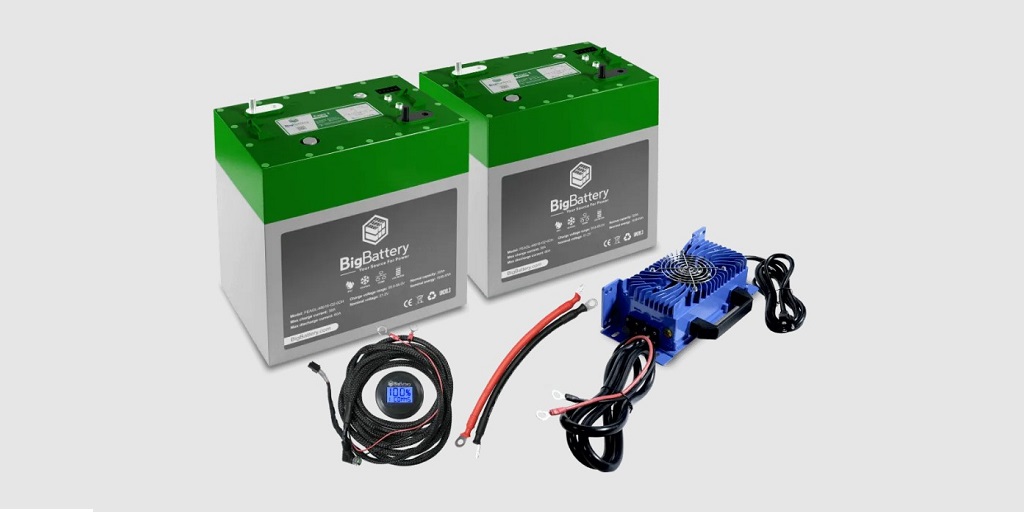
You’ve heard of the many virtues of home battery backup systems with advanced, modern lithium batteries, like LiFePO4 (or LFP) batteries. They are lighter, have higher energy density, last longer, provide more consistent output, and are easier to maintain, to name just a few.
But they are still batteries, and batteries are complex electrical devices that must be properly used and kept up so that they can deliver on their promised features.
With that said, this post will look at two problems that affect even the most advanced, highest-end lithium batteries, overcharging and deep discharging, along with how a system known as a BMS, or battery management system, can help prevent them.
The Problems of Overcharging and Deep Discharging
Batteries are designed to hold a specific electrical potential corresponding to a full state of charge. So let’s say you have a 12V battery that is actually fully charged at 12.6V. Once you charge it fully so that its state of charge is 100%, if you try to “force” more energy into the cell, that energy cannot be stored as electrical potential and must be converted into other forms.
Typically, this energy gets converted to heat, which can damage the chemical bonds in the battery’s cells. When these bonds break down, they can create more heat, leading to thermal runaway, which is a hazard in and of itself.
Breaking down these bonds also means that, from an electrochemical perspective, the battery cannot hold a charge as efficiently as it is designed to. This, naturally, has severe adverse effects on a battery’s ability to take a charge as well as to discharge efficiently. Overcharging a battery, in short, adversely affects battery life.
As for deep discharge, that occurs when a battery’s state of charge drops below recommended levels. With a lead-acid battery this starts at like 50%, but modern lithium batteries, such as LFP batteries, are generally more accommodating and can be dropped to nearly 20% before any damage occurs. Some can be discharged further as long as the state of charge is restored right away.
Either way, once the depth of discharge crosses a certain threshold, the battery’s cells may become imbalanced, which can cause irreversible charge capacity loss. In other words, it will become difficult for the battery to accept and maintain a charge level the way it used to. This manifests as a battery that will “read” charged, but which will not last as long.
So in both cases, overcharging and deep discharging, the battery’s discharge potential and lifespan will be adversely affected.
What a Battery Management System Does
Fortunately, most home battery backup systems are covered by battery management systems that protect them against these, and other, similar issues.
A battery management system will monitor each battery’s individual cell levels, regulating the current and voltage supplied during charging, and balancing each cell so that none of them is overcharged. A battery or a battery system with an integral battery management system will also be closely regulated during discharge to ensure that none of the cells is depleted to a state of charge or voltage level that’s too low.
In other words, a battery management system ensures even charging and discharging, upholding consistent performance and a longer battery life.
Explore Home Battery Backups with Battery Management Systems
If you’re here to learn more about home battery backup options for your home (such as for a solar energy system) or you want to learn more about battery management systems, visit BigBattery. Their website has plenty of helpful resources, and you can also get in touch with their customer service team for more assistance.
