
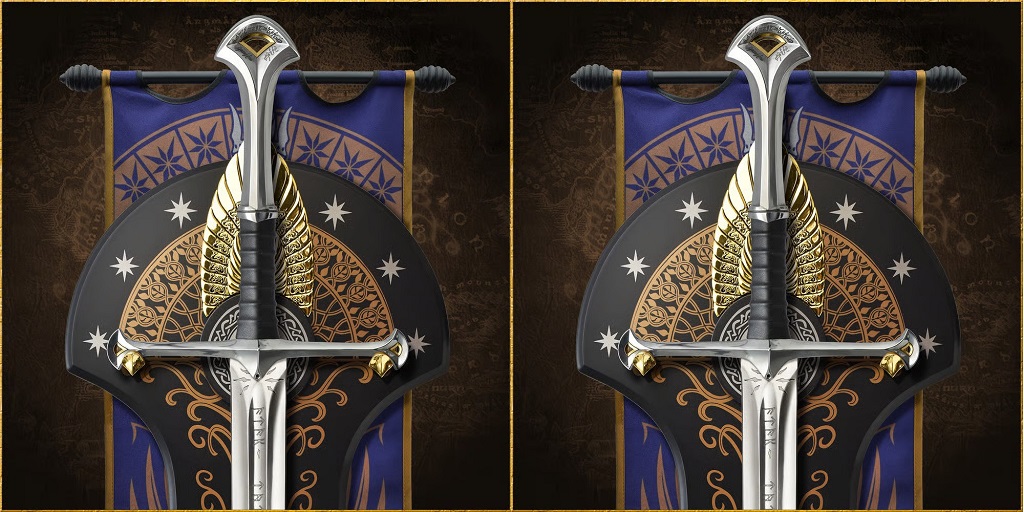
Spring steel swords, like spring steel katana, have become quite popular as examples of battle ready swords, especially in relatively recent years.
But why is it that spring steel is coveted for the manufacture of swords and to a different degree, to knives and tools?
Let’s take a closer look.
The Steel Chemistry of Spring Steel Katana and Other Swords
A term that gets thrown around far too much in the realm of swordsmithing is “high carbon,” but the truth is, without more context or specificity, this term means little to nothing.
In truth, a very “high carbon” steel might actually have too much carbon to make a suitable sword, and the blade would be too brittle.
Common spring steel alloys, like 5160 spring steel, actually have relatively low carbon by contrast to some other tool steels.
As a comparison, 5160 has between .5% and .64% carbon, which is lower than some tool steels like 1095, which has .9% or so.
Technically this means 5160 cannot be tempered to offer the same hardness and edge retention as some tool steels, but it is plenty for a sword and comparable to 1050 or 1060.
But swordsmithing is not (by a long shot) solely about carbon content, edge retention and general hardness, despite the fact that those things are important.
This alloy also contains a balance of traces like silicon and manganese, and can be tempered so that it does not take a set, snap, shatter, or bend, even when stressed.
As a spring steel, when properly tempered, if a sword made with a spring steel is stressed and bent, it will return to true, rather than being permanently damaged.
For what it’s worth, a specific spring steel like 5160 also contains a smidge of chromium, which is often missing from sword steel alloys because it makes the steel too soft.
In this case, however, that little bit of chromium (though it does make the steel a modicum softer) actually makes it much more corrosion resistant.
Which is another thing about a spring steel katana. Not only will it stand up well to impacts and blows without chipping or breaking or bending, but it will also require just a bit less maintenance than your average sword.
Lastly, it’s interesting to note that spring steels like 5160 are not just potentially more flexible and stress resistant than tool steels like 1060 and 1095, but they actually often outperform them on toughness tests as well.
And this, at least from a very high level, is why spring steel katana are popular – and why spring steel indeed can make an excellent, battle ready sword, assuming it is constructed well and properly tempered.
Where to Explore Spring Steel Katana and Other Battle Ready Swords
Want to learn more about spring steel katana and other battle ready swords, or about the alloys that are used to make them? Whether you’re just looking for information on steel or want to add a battle ready sword to your collection, visit True Swords. They carry a wide assortment of battle ready swords along with traditional Japanese sword patterns at competitive prices.
