
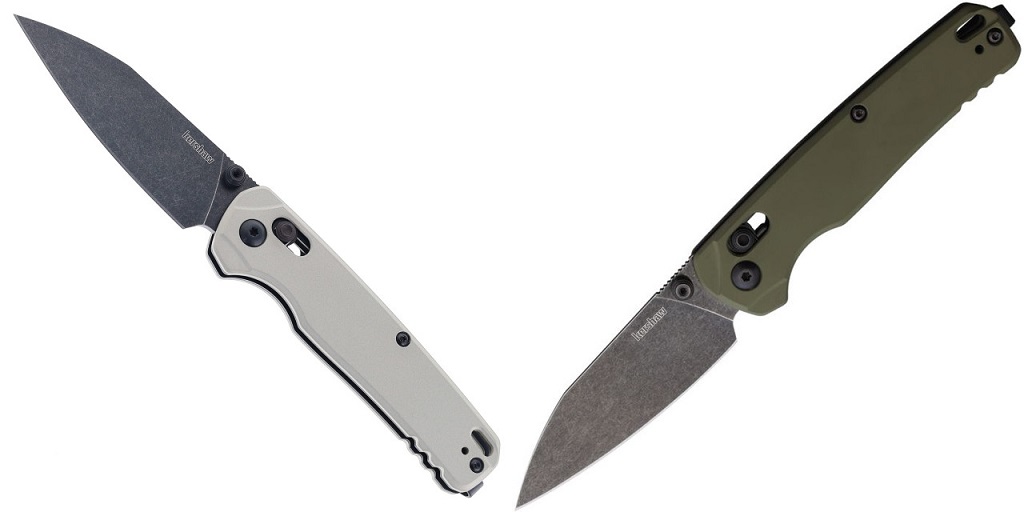
Kershaw is not really one of the brands you (probably) think of when you think of a hunting knife. You might reserve that for Buck, or Gerber, or even one of ESEE’s models.
But a Kershaw hunting knife, if you pick a good one, can be an investment both serviceable and wise.
The Kershaw Broadside is a great option – and here are the reasons why.
About the Kershaw Broadside
The first thing you will notice about the Broadside is that it is a folding knife. Most good hunting knives are fixed, benefiting both from strength and simplicity. But folders are not verboten, and if Buck could do it with the 110 over half a century ago, Kershaw can do it in the Broadside today.
The hallmark of the Broadside is a stout, 4.85” D2 drop point blade. A little large, perhaps, but the size and heft of the knife give it the ability to stand up to serious abuse in the field.
It could easily dispatch the task of cleaning and dressing small game, and though perhaps a bit big, won’t flinch in capacity as a bird knife, either. It’s also more than enough to take down the job of cleaning and butchering larger game.
The large size, jimping, choil, and generous dimensions of the handles also make this an excellent knife for breaking down game, as it is easy to manipulate and control, even if your hands are cold, greasy, or wet, which you’ll find often happens in the field immediately after a harvest.
The steel, D2, is another great alloy for a few good reasons. One is that it is fairly easy to get an extremely sharp edge with D2. Another is that it is reasonably easy to resharpen in the field.
One more is that this steel, though it is not stainless, is on the “stainless-esque” end of the tool steel spectrum. It will not rust as easily as a steel in the 10XX class, so really all you need to do is keep it clean and dry and you should be good.
As for the folding aspect; there are many, many arguments in favor of a fixed blade knife for hunting that we won’t get into here, and as always, you will need to exert yourself to keep the pivot and lock mechanisms clear.
On that note, the lock mechanism itself is something that makes this an excellent knife, and not just for sporting pursuits. What Kershaw calls a DuraLock is really just an AXIS-style bar lock that is exceptionally strong, safe, and easy to disengage.
It is likely the strongest lock type on the market at this time, which makes it ideal for hard jobs like separating joints, severing sinew and processing large cuts of meat, which you will have to do in the wake of a harvest.
But on top of that, it is also very strong, meaning there is little to no chance that it will disengage and fold on your hand while you’re working (which can happen with a liner lock or a frame lock, or even a lock back) and it can easily be engaged or disengaged with one hand (either right or left).
And then of course there is the name, which is a cheap thing, but come on – Broadside? That’s a name for a hunting knife if there ever was one.
So, if those reasons aren’t good enough ones to hail the Broadside as a great Kershaw hunting knife, keep looking.
Where to Get Yourself a New Kershaw Hunting Knife
Want to learn more about the Broadside or see what else is out there from Kershaw? Visit White Mountain Knives and see what’s in store. They carry this and many others.
For more information about Buck Survival Knife and Small Gerber Knife Please visit: White Mountain Knives, LLC.
