Fishing anywhere puts a lot of strain on your gear, but in saltwater most of all. Saltwater and salt spray are impressively corrosive agents that will do quite a number on your gear, especially your reel.
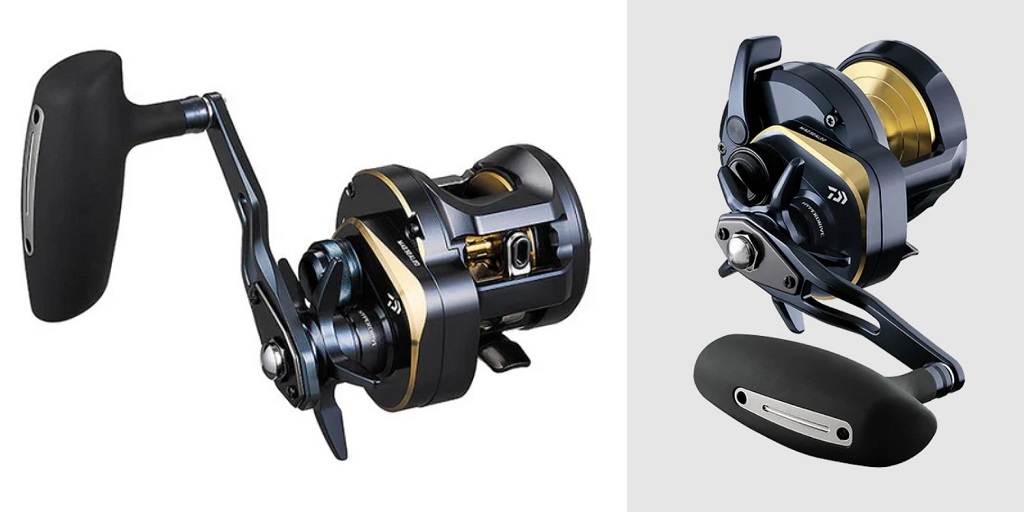
With that said, here’s why reel selection matters most of all in saltwater applications, and why examples like Shimano, Daiwa, and Accurate reels lead the pack for quality and dependability.
Why Quality in Saltwater Reels Matters
In a nutshell: because saltwater will destroy a reel if it’s not built to make the proverbial grade.
High-quality reels like Shimano and Accurate reels are made with high quality brass or stainless steel gears and bearings that resist corrosion, even when exposed to saltwater.
Some are also made with fully-sealed bearings that help prevent saltwater ingress, helping to slow down corrosion.
Others are made with graphite and aluminum external components like spools and crank arms and reel handles, rather than steel or polymer, which are, in order, not corrosion resistant enough to warrant use in saltwater, or simply not strong enough.
But that’s just the tip of the iceberg. It’s not just about corrosion-resistance, but also about strength and the ability to fight big fish.
Some manufacturers, such as Accurate reels, are made with special drag systems that evenly distribute pressure among both sides of the reel, adding strength, increasing the smoothness of operation, and helping to prevent failure.
Most saltwater-grade reels are also made with stronger, more reliable drag systems to begin with, drag system optimization aside.
Ultimately, at the end of the day, if you don’t put good money into a saltwater grade reel, you will find that you get what you pay for. Either the whole thing will seize from internal rust, the drag will slip or fail, or you’ll strip the gears.
Not good in any case.
Basic Notes for Cleaning
Just a note: paying top-dollar for a saltwater reel made with corrosion-resistant internal components and sealed bearings does not mean that you can skip cleaning when you get back to port.
Saltwater reels should be rinsed and wiped down after every outing. Mist them with a hose and use a damp cloth to wipe down the exterior to wash away salt deposits. Then add a drop of all to all exposed hardware, fittings, and moving surfaces like the levelwind, line roller, and reel handle.
Also, reels that see saltwater service should be fully stripped, cleaned, and re-greased at least once every season – no exceptions.
Where to Shop Daiwa, Shimano, and Accurate Reels
To explore quality in saltwater-grade reels from the top brands, including Shimao, Daiwa, Penn, and Accurate reels, visit Johnny Jigs. They represent the best in the saltwater industry along with a wide range of fishing tools, jigs and other lures, and other tackle.
Bookmark their page and the next time you need to load up on jigs and other metals before you hit the water, you’ll know where to look.