
You’ve heard terms like duplex, triplex and quadruplex wire, but what are these things, and what are they used for?
This short post will break down some of the details.
What Is Quadruplex Cable?
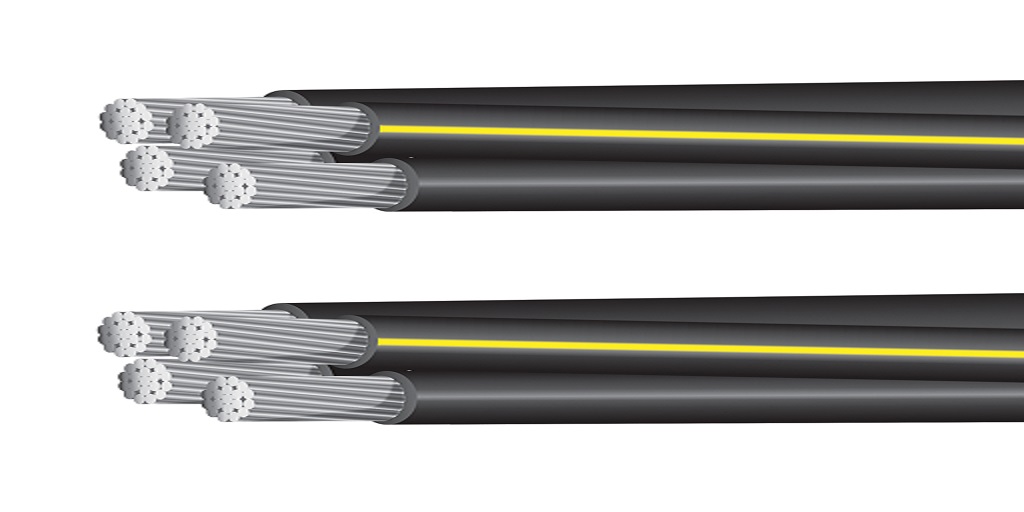
To put things as simply as possible, quadruplex cable is a cable that contains three phase conductors in parallel, along with a ground or neutral wire for a total of four, hence the name. The neutral wire is typically marked prominently to distinguish it, although sometimes it is a bare lead. This differentiates it from triplex wire which is similar, but which has two conductors and a ground or neutral wire, for a total of three.
Quadruplex Wire Uses
Quadruplex wire’s primary use case is for secondary power distribution, which occurs once a transformer lowers the voltage of electricity to a safe level for such purpose.
It is primarily used for power transmission or distribution to residences as well as businesses. There are multiple types of quadruplex wire, as well. Some are intended for burial, and others are aerial installations.
In addition to power service entry, quadruplex wire can is also commonly used for outdoor lighting as well as for power transmission and distribution for temporary construction sites.
Quadruplex cable is commonly insulated with cross-linked polyethylene, or XLPE, which is a highly durable electrical insulator that is abrasion resistant, chemically stable, and weather resistant as well, making it suitable for outdoors installations.
Additionally, this insulation is typically surface-printed to identify the cable as well as its specifications.
Why Is It Aluminum?
Quadruplex wire is commonly made from aluminum, whereas many electrical conductors are typically made from copper. There are several reasons for this beyond what is apparent.
The obvious reason that quadruplex wire is made from aluminum instead of copper is cost. With copper costs bloated, it would be a severe financial strain on the construction industry to use copper in place of aluminum.
But that is not the only reason. Since some quadruplex wire is used in aerial installations, aluminum is a far better choice. It is much easier to raise and install aluminum than copper wire, and since it is so much lighter than copper, this further reduces the costs and the strain.
The one drawback is the strength of aluminum, which is lesser than copper. Because of this, aluminum quadruplex wire is often strengthened with a steel member that resists stretching and sagging, which it is particularly important to avoid in aerial installations.
Shop High-Quality Quadruplex Cable
Need more information on triplex or quadruplex wire, inclusive of how it is used, as well as the common specifications? Take a look at what’s available at EWCS Wire. They carry a wide range of high quality electrical wire and cable, including both copper and aluminum cable as well as tray cable.
Take a look at what they offer and get in touch with them if you have any questions about product specifics. They can help you find what you need.