
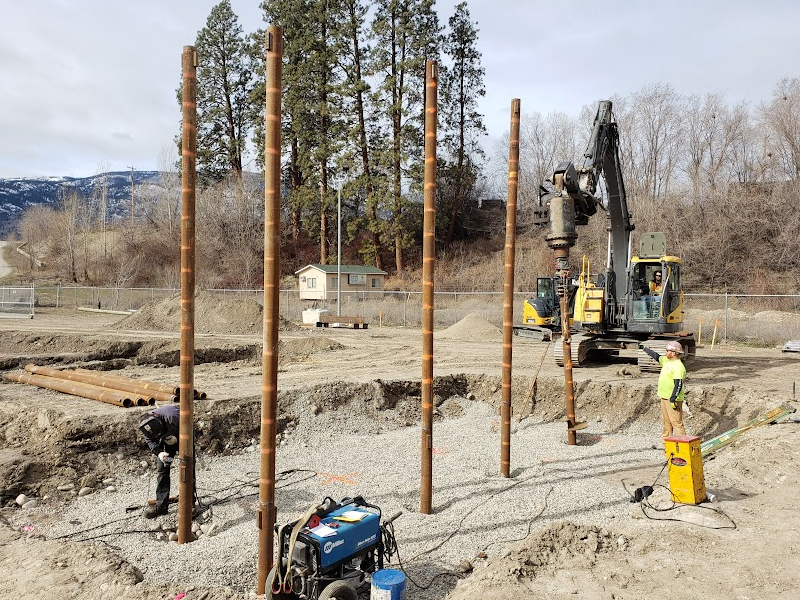
The performance of BC helical piles depends on a combination of factors, and one of the most critical yet often overlooked is the shaft diameter. This single element influences how the pile resists loads, transfers forces into the soil, and performs over the long term—especially in challenging ground conditions. Understanding the engineering behind shaft diameter helps ensure that foundations are not only strong but also optimized for both cost and efficiency.
The Core Function of Shaft Diameter
In simple terms, the shaft is the central steel pipe or solid bar that connects the helical plates and transmits loads from the structure to the soil. The diameter of that shaft determines how much axial and lateral stress the pile can handle. A larger diameter increases the structural capacity and stiffness of the pile, allowing it to carry greater loads with less deflection.
For example, in dense or rocky soils, larger shaft diameters are typically preferred because they can resist higher torque during installation without bending or buckling. In contrast, for lighter structures or soft soils, smaller shafts may perform adequately while keeping material costs lower.
Load-Bearing Capacity and Structural Integrity
The size of the shaft plays a major role in defining both compression and tension capacity. A larger diameter increases the cross-sectional area, which allows the BC helical piles to resist higher compressive forces without experiencing structural failure. This becomes especially important for commercial and industrial structures, where the foundation must endure heavy loads and potential uplift forces.
Additionally, a thicker and wider shaft enhances resistance to lateral movement. This is vital in areas prone to frost heave or shifting soil layers, where the piles may face side pressures. With the right shaft diameter, engineers can ensure the pile remains stable even when subjected to long-term environmental stress.
Torque Correlation and Installation Depth
One of the unique aspects of BC helical piles is that installation torque directly correlates with load capacity. Essentially, the higher the torque achieved during installation, the greater the load the pile can support. Shaft diameter plays a critical part in this equation.
A pile with a small shaft may not withstand high torque values, limiting its ability to penetrate denser soils or reach the required bearing stratum. On the other hand, a larger shaft diameter allows the installer to apply higher torque without damaging the pile. This results in deeper embedment and a more secure foundation, ensuring that the pile can achieve the necessary capacity for the project’s load demands.
Balancing Design Efficiency and Cost
Choosing the correct shaft diameter isn’t just about maximizing strength—it’s about finding the right balance between performance and cost. Oversizing the shaft adds unnecessary steel and increases project expenses. Undersizing it, however, risks premature failure, excessive movement, or inadequate load capacity.
That’s why engineers carefully analyze soil conditions, structural loads, and torque requirements before selecting a shaft diameter. The right decision can save both time and material costs during installation while maintaining long-term reliability.
The diameter of the shaft may seem like a small detail, but it carries major implications for the strength, stability, and longevity of BC helical piles. From installation torque to long-term durability, every millimeter counts. Whether supporting a small structure or a large industrial facility, choosing the right shaft diameter ensures that the foundation performs as intended—strong, steady, and built to last.
For More Information About Commercial Drilling Service Bc and Drilling Service Company Bc Please Visit: ATLAS PILING.
