
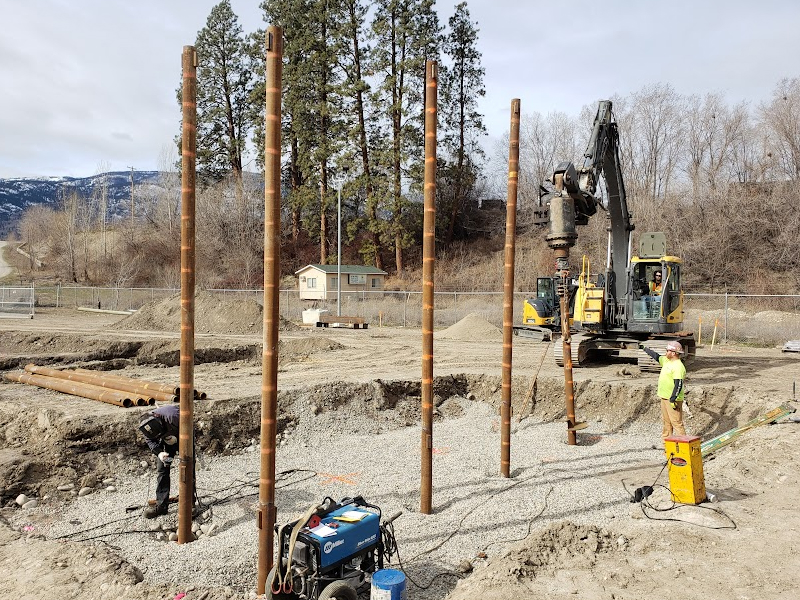
Construction projects on unstable or difficult ground often come with added financial concerns—particularly around insurance. Insurers weigh risk carefully, and foundations placed on poor soils, flood-prone zones, or areas susceptible to frost heave typically face stricter conditions. Choosing the right foundation system can therefore influence not only the structural integrity of a project but also how insurers view its long-term risk profile. This is where BC helical piles come into the picture, offering unique benefits that extend beyond engineering and into the realm of insurance considerations.
Why Foundations Affect Insurance Costs
Insurance providers don’t just look at the structure above ground; they factor in how stable and durable the foundation will be over time. If a site has a history of shifting soils, flooding, or ground movement, underwriters will typically assign higher risk ratings, which translate to increased premiums.
By using foundation systems designed to adapt to challenging ground conditions, builders and property owners may reduce the likelihood of structural settlement, uneven floors, or foundation failures—problems that often trigger costly insurance claims.
Risk Mitigation with Helical Foundations
BC helical piles are valued for their ability to be installed with precision in soil conditions that would otherwise be considered problematic. Their installation method generates immediate load-bearing capacity, giving engineers and insurers confidence in their stability. This ability to perform reliably in less-than-ideal soil directly impacts how risk is calculated.
For insurers, fewer uncertainties around soil performance mean fewer potential claims. Reduced likelihood of structural settlement translates into a stronger case for lower insurance premiums and better overall coverage terms.
High-Risk Site Examples
Certain locations consistently raise red flags for insurers. Examples include:
- Coastal or riverfront properties prone to erosion or flooding.
- Clay-heavy soils where expansion and contraction can cause foundation shifts.
- Frost-prone regions where ground movement leads to frost heave.
- Industrial sites requiring support for heavy loads on questionable soil.
In each of these cases, the decision to use BC helical piles offers measurable risk mitigation. Their ability to be installed below frost lines, resist uplift, and stabilize heavy structures reassures both engineers and insurers.
How Insurers View Long-Term Performance
Insurance providers take a long view of risk. They aren’t only concerned with what might happen during construction but with the decades that follow. Foundation failures, even minor ones, can lead to expensive claims involving structural repairs, legal disputes, and even business interruption.
Helical foundations, due to their predictable engineering performance, reduce those uncertainties. For commercial buildings, residential projects, and industrial facilities alike, this reputation for reliability becomes an asset during insurance evaluations. Projects built on BC helical piles may be seen as less likely to generate claims, which strengthens the argument for favorable policy terms.
Balancing Cost and Risk
Builders and developers often weigh upfront construction costs against long-term savings. While foundation systems like helical piles may carry higher initial expenses compared to traditional methods, the long-term implications—especially around insurance—can tip the balance in their favor.
The reduced likelihood of structural damage means fewer repair expenses and fewer claim filings. Insurance companies generally favor projects that prioritize risk mitigation, which may even make it easier to secure coverage for properties in otherwise hard-to-insure areas.
In short, reliable foundations can change the way insurers evaluate a property. On difficult sites, the decision to use BC helical piles can mean the difference between inflated premiums and manageable long-term insurance costs.
For More Information About Best Underpinning Services and Drilling Service Company Bc Please Visit: ATLAS PILING.
