There’s something magical about the moment a child clicks the final piece of a puzzle into place. That tiny victory? It’s doing more than keeping them busy: it’s quietly building the kind of brainpower that shows up later in math class, science labs, and even engineering design software.
If you’re a teacher (or a parent doubling as one), here’s the real kicker: when kids make their own puzzle as part of classroom activities, they’re getting even more out of it.
Let’s break down why this low-tech learning tool deserves a serious comeback.
Puzzle Play Isn’t Just Play
Studies have shown that kids who engage with puzzles between the ages of 2 and 4 tend to develop stronger spatial reasoning skills later on. And we’re not talking about memorizing shapes, either. We’re talking about the ability to rotate, flip, and mentally manipulate objects in space.
That’s a major win for early STEM learning.
Whether it’s building a block tower, understanding how gears work, or plotting points on a graph, spatial reasoning underpins some of the most valuable cognitive skills for science and math success. And the best part? It doesn’t require expensive software or a tablet subscription.
It starts with something as simple as cardboard pieces, and gets even better when kids create those pieces themselves.
How “Make Your Own Puzzle” Works in Classrooms
Want to integrate puzzle-making into your lesson plans? You don’t need an art degree or a laminating machine. Here’s a quick example that works from kindergarten through fifth grade:
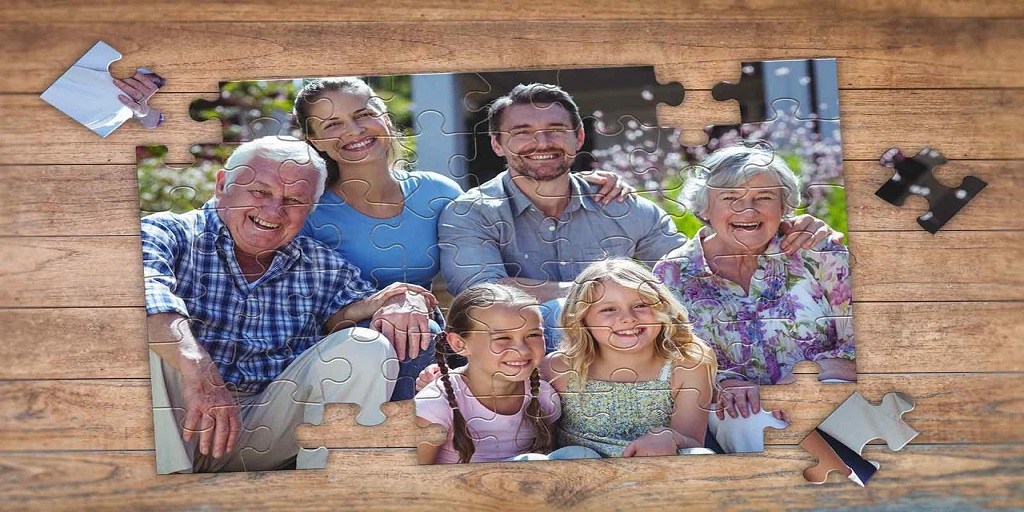
- Print a Class Photo or Theme Image – Let students bring in drawings, or use images related to the current lesson (like planets, maps, or animals).
- Mount on Cardboard – Glue the image to cardboard or thick cardstock.
- Cut into Pieces – Older students can design their own puzzle shapes using grids. For younger ones, pre-cutting works too.
- Let the Solving Begin – Have kids solve each other’s puzzles in small groups. Bonus points for collaborative problem-solving.
Making puzzles taps into more than fine motor skills. It invites storytelling, memory-building, and decision-making about what visuals are meaningful, all while reinforcing lesson content.
Equal Access, Equal Input
One thing to keep in mind? Not all puzzle play is created equal.
There’s growing evidence that the way children interact with puzzles—and the kind of feedback they get—shapes how much they benefit. In some cases, boys tend to receive more spatial language from adults during puzzle play, and are often given more complex puzzles. That’s not necessarily intentional, but it is something to be mindful of in mixed classrooms.
Giving every student the same chance to make their own puzzle, and encouraging spatial talk (like “rotate,” “flip,” or “fit”) while they’re working, ensures every child has a fair shot at building those brain skills.
More Than a Brain Boost
Aside from all the educational benefits, making puzzles is simply fun. It gives kids ownership, creativity, and pride. And when done as a group activity, it’s a subtle but powerful community-builder.
Whether it’s a rainy day project, a hands-on lesson in geometry, or part of a broader unit on design and problem-solving, picture puzzles offer a timeless charm with lasting benefits.
So next time you’re planning your classroom activities, don’t overlook the humble jigsaw. Help your students make their own puzzle, and let them surprise you with how much they’re learning between the pieces.
Need help turning your images into puzzle-ready prints? Head over to MakeYourPuzzles.com to turn classroom creations into high-quality jigsaw keepsakes that go beyond the art wall.