
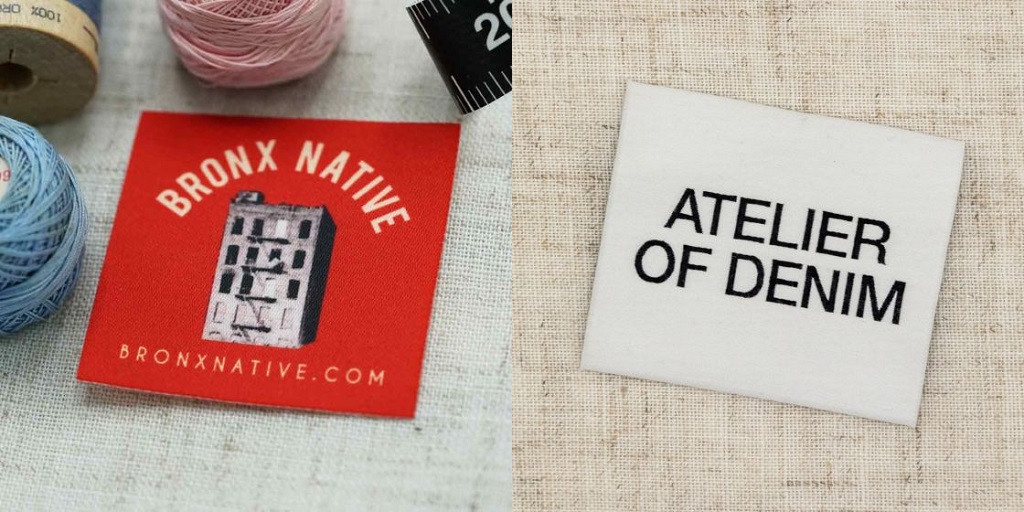
Applying clothing name labels, either for the purpose of personalization or for branding, can easily be done at come, and very conveniently, with just an iron, a clear working space, and a few spare minutes – as long as you have some quality heat transfer labels.
Here’s what the process looks like.
The Process
To apply heat transfer clothing name labels successfully, you will need:
- A clean working space and a safe, heat resistant surface (like an ironing board)
- An iron
- Labels
- The fabric you intend to label.
First, prepare your clothing name labels and equipment, ensuring that everything is in place and ready to go.
Mark the location on your garment where you would like to place the label. Use a ruler if necessary, depending on where you will be applying.
Position the heat transfer label with the adhesive side down against the fabric. Heat up your iron; to apply heat transfer clothing labels, an iron with no steam is preferred. The temperature is dependent on the adhesives your label uses, but commonly temperatures of 270℉ to 300℉ are necessary to activate the adhesive.
Once the iron has heated up adequately, press it down firmly over the top of the label and hold it for 8 to 10 seconds. Keep the iron still; do not move it.
After the 8 to 10 seconds have elapsed, lift the iron straight up off the garment to avoid ruffling or shifting the label. Let the label cool for a few seconds, then test it to ensure that it has firmly adhered to the fabric.
If any areas of the label have not set, particularly around the corners, repeat the process with the iron to ensure that the label sticks.
Let the label rest for one to two minutes before moving the garment. If there is any backing film over the top surface of the label, it can be removed at this point. Once cool, your garment is ready to use.
Why Use Heat Transfer Labels in the First Place?
Now, you might be thinking, “why would I want to use heat transfer clothing name labels in the first place?”
There are other options. That much is true. But there are plenty of benefits associated with heat transfer labels. Consider that:
- Heat transfer labels are better for those with sensitive skin, as there is no stitching.
- Heat transfer labels can be highly cost effective.
- They are easier to apply at home, all you need is an iron.
- The process of applying them is significantly faster than any label that would need to be stitched on.
Help! I Need to Order Custom Clothing Name Labels
If you landed here because you are looking for a place where you can order custom clothing name labels (heat transfer or otherwise) visit Quality Woven Labels. They offer tons of customizable options in a variety of sizes, materials, and formats. Don’t waste your time reading about it here, just visit their website and see for yourself.
